World Cup 2026 Betting
World Cup 2026 Betting Guide — Odds, Picks & Analysis | MatchPoint 26
 Available in US
Loading...
Complete 2026 FIFA World Cup betting guide for Canadian bettors. Tournament odds, group predictions, match schedules, and expert analysis across all 48 teams.
Five Fundamentals for World Cup 2026 Betting Success
- The expanded 48-team format means 66.7% of teams reach the knockout phase — third-place qualification markets consistently undervalue actual advancement odds
- Canada plays all three group matches on home soil in Toronto and Vancouver, creating measurable home-field value that futures markets have yet to fully price
- Bill C-218 made single-game sports betting legal across Canada in 2021; Ontario, Alberta, and other provinces now offer regulated sportsbook access
- Decimal odds dominate Canadian platforms, though American moneyline format appears alongside due to US operator influence in the market
- The 104-match schedule across 39 days expands live betting windows significantly compared to 2022's compressed timeline
Tournament Overview — Format, Dates & Host Cities
I've covered four World Cups as a betting analyst, but nothing in my career has matched the scale of what's about to unfold across North America. When FIFA confirmed the 48-team expansion back in 2017, the betting community immediately started crunching numbers on how additional matches would reshape futures markets. Nine years later, that speculation becomes reality — and the opportunities for informed wagering have expanded right alongside the tournament bracket.
The 2026 FIFA World Cup runs from June 11 through July 19, spanning 39 days and 104 matches across three nations. Mexico hosts the opening ceremony and first match at Estadio Azteca on June 11, while the United States claims the knockout rounds and final at MetLife Stadium in New Jersey on July 19. Canada contributes two venues that will host 13 matches combined: BMO Field in Toronto and BC Place in Vancouver. For the first time in World Cup history, three countries share hosting duties — a logistical undertaking that stretches from Mexico City's 2,240-meter elevation to Vancouver's sea-level dome.
48 Teams
104 Matches
16 Venues
The format itself represents the most significant structural change since the tournament expanded to 32 teams in 1998. Forty-eight nations compete in 12 groups of four, with the top two from each group advancing automatically to a Round of 32. Here's where the math gets interesting for bettors: eight third-place finishers also qualify, meaning 32 of 48 teams (66.7%) reach the knockout phase. That percentage dwarfs the 50% advancement rate under the previous format — and it fundamentally alters how we should approach group-stage futures.
The eleven American venues handle 78 matches, including every knockout round from the Round of 32 onward. SoFi Stadium in Los Angeles hosts one semifinal, while MetLife Stadium gets both the semifinal and final. Dallas, Houston, Atlanta, Miami, Seattle, San Francisco, Philadelphia, Boston, and Kansas City round out the American roster. Mexico's three stadiums — Azteca, BBVA Monterrey, and Estadio Akron in Guadalajara — host the remaining group matches alongside Canada's two venues.
Host Nation Automatic Qualification
Canada, Mexico, and the United States all qualified automatically as co-hosts. This marks Canada's first World Cup on home soil and only their third appearance overall after 1986 and 2022.
What does this mean for your betting approach? The expanded format creates several market inefficiencies I'll address throughout this guide. Third-place qualification odds rarely reflect actual advancement probability. Group winner markets often undervalue underdogs now that even a poor start can be salvaged. And the sheer volume of matches — 104 compared to 64 in 2022 — means more live betting windows, more player props, and more opportunities for disciplined handicappers to find edges.
The group stage runs June 11 through June 29, with three matchdays per group compressed into an 18-day window. Rest periods between matches vary by group assignment and travel distances — a factor that becomes more significant when you're handicapping specific fixtures. The knockout rounds follow immediately, with the Round of 32 beginning July 1 and the final concluding on July 19. For Canadian bettors, that timeline means peak wagering activity coincides with summer schedules rather than the December disruption we experienced in Qatar.
Interactive Tool
Advancement Rate Increase, and Canada's Share of Total Matches
Calculate the exact percentage-point jump in advancement odds under the new format, and what share of all 104 matches Canada's venues actually host.
Increase in Percentage Points
-
-
Old Format
-
2026 Format
-
Relative Increase
-
What this guide gives as two separate rates without the gap: "That percentage dwarfs the 50% advancement rate under the previous format." The exact increase in percentage points is never calculated — it's 16.7 points, a relative increase of +33.4%.
Canada's Share
-
Canada Matches
-
Tournament Total
-
Elsewhere
-
What this guide gives as two separate figures without the share: "Canada contributes two venues that will host 13 matches combined"... "104 matches across three nations." The share is never calculated — Canada hosts just 12.5% of all matches, with 91 played elsewhere.
Understanding this structural foundation is essential before diving into specific odds, teams, or strategies. The 48-team format isn't just a cosmetic change — it's a fundamental reset of everything we thought we knew about World Cup betting mathematics. I've spent the past two years modeling how these changes affect various market types, and the analysis throughout this guide reflects those calculations applied to the actual draw results.

Before we examine individual groups and odds, here's a condensed summary of what matters most for your World Cup 2026 wagering strategy.
All 12 Groups at a Glance
The draw ceremony produced several fascinating narratives — and at least three groups that oddsmakers immediately labeled competitive enough to generate genuine upset potential. Before I started analyzing individual matchups, I pulled every group into a single reference document. You'll want this same bird's-eye view before diving into specific betting markets.
Each group contains four teams. The top two finishers advance automatically to the Round of 32, and the eight best third-place finishers also qualify. This structure means that in most groups, three of four teams will reach the knockout phase. The implications for betting are significant: backing a team to "qualify" becomes less valuable when baseline qualification probability sits near 75% for any competent side.
| Group | Team 1 | Team 2 | Team 3 | Team 4 |
|---|---|---|---|---|
| A | Mexico | South Korea | South Africa | Czechia |
| B | Canada | Switzerland | Qatar | Bosnia and Herzegovina |
| C | Brazil | Morocco | Haiti | Scotland |
| D | USA | Paraguay | Australia | Turkey |
| E | Germany | Ivory Coast | Ecuador | Curaçao |
| F | Netherlands | Japan | Sweden | Tunisia |
| G | Belgium | Iran | New Zealand | Egypt |
| H | Spain | Saudi Arabia | Uruguay | Cape Verde |
| I | France | Norway | Senegal | Iraq |
| J | Argentina | Algeria | Austria | Jordan |
| K | Colombia | Portugal | Uzbekistan | DR Congo |
| L | England | Croatia | Ghana | Panama |
Several groups immediately stand out for betting purposes. Group H pairs Spain with Uruguay — two teams with legitimate knockout-round ambitions fighting for group positioning. Group L pits England against Croatia in a rematch of the 2018 semifinal, with Ghana adding African pedigree to an already loaded quartet. Group F features Netherlands and Japan, both teams I've consistently flagged as undervalued in futures markets over the past three World Cup cycles.
Bosnia and Herzegovina qualified for their first-ever World Cup by defeating Italy in the UEFA playoff. Their Group B assignment against Canada marks the tournament debut for a nation that gained FIFA membership only in 1996.
For Canadian bettors specifically, Group B deserves extended attention. The draw placed Canada alongside Switzerland (the clear group favorite at most sportsbooks), Qatar (2022 hosts returning without home advantage), and Bosnia and Herzegovina (debutants with a defensive identity). I'll break down Group B in detail in the following section, but understand that this draw represents a navigable path to the knockout rounds for the host nation.
When evaluating group betting markets, pay attention to venue assignments. Each group's matches rotate among a subset of stadiums — and travel distances within North America can be substantial. A team playing in Vancouver on Matchday 2 and Miami on Matchday 3 faces different recovery challenges than one staying within a single region. These logistics rarely appear in standard team analysis but absolutely affect match outcomes.
For comprehensive breakdowns of every group, including odds comparisons, predicted standings, and match-by-match analysis, explore the complete World Cup 2026 groups guide. The sections below focus on Canada's specific situation before broadening to the overall betting landscape.
Canada's World Cup — Group B Breakdown
I remember sitting in a Toronto bar during Canada's 2022 World Cup campaign, watching Alphonso Davies and the squad fight valiantly against Belgium and Croatia before mathematical elimination ended their run with zero points. Three and a half years later, that same program returns to the world stage — but this time with a home advantage that betting markets have only begun to quantify.
Canada's Group B assignment pairs them with Switzerland, Qatar, and Bosnia and Herzegovina. On paper, this represents one of the more navigable draws a host nation could receive. Switzerland enters as the group favorite based on consistent UEFA tournament performances and a well-established tactical identity. Qatar brings World Cup experience from 2022 but struggles significantly away from home — their Asian Cup 2024 title came on friendly soil in the Gulf, and confederation qualifying revealed vulnerabilities against organized opposition. Bosnia and Herzegovina arrive as tournament debutants, having secured their spot through the UEFA playoff pathway with a penalty shootout victory over Italy.
Canada plays all three group stage matches at domestic venues: BMO Field in Toronto and BC Place in Vancouver. No other team in the tournament has this scheduling advantage — even co-hosts Mexico and the United States play some group matches at each other's stadiums.
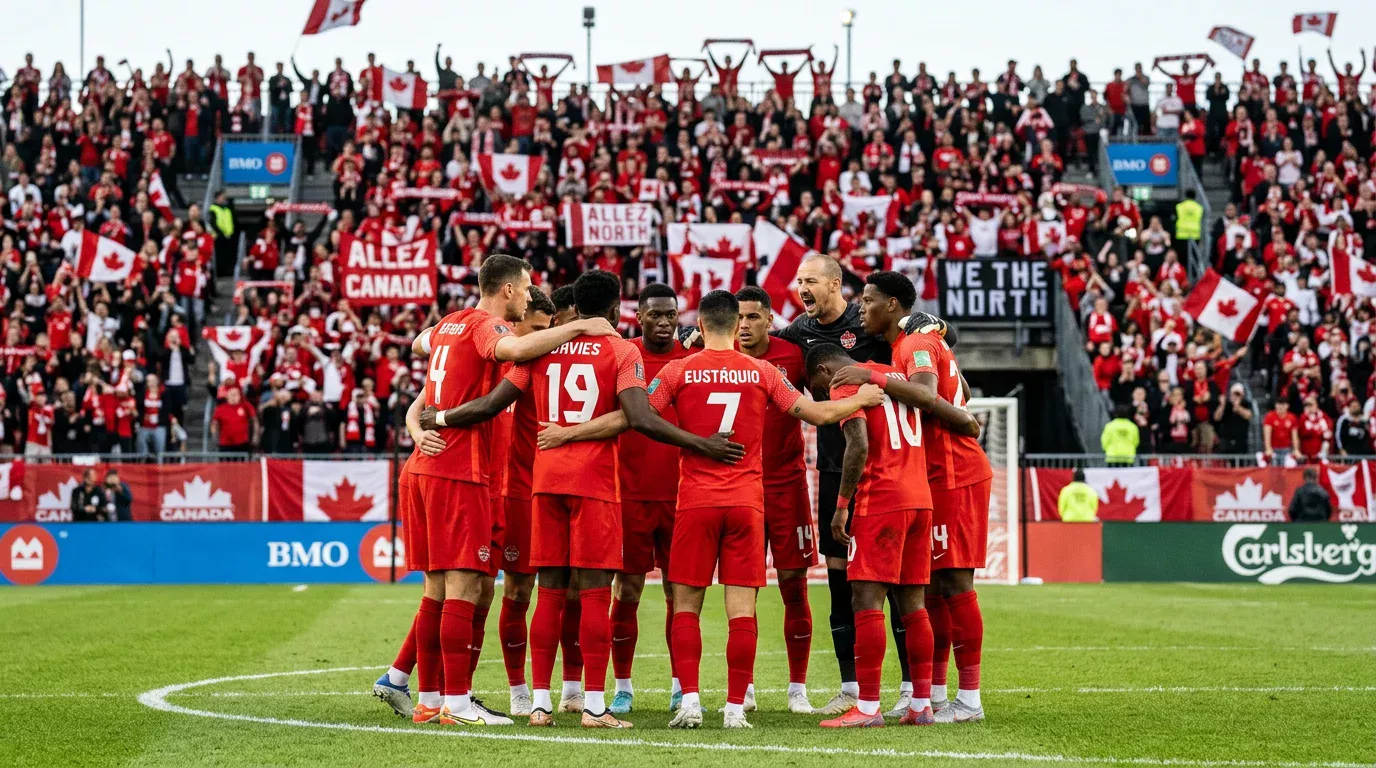
The scheduling specifics matter enormously for handicapping. Canada opens against Bosnia and Herzegovina on June 12 at BMO Field, kicking off at 3:00 PM ET — a comfortable afternoon start for the home crowd. Match two arrives on June 18 against Qatar at BC Place, with a 6:00 PM ET kickoff (3:00 PM local time in Vancouver). The group concludes on June 24 with Switzerland at BC Place, a 3:00 PM ET match that translates to a noon local start on Canada's west coast.
| Date | Match | Venue | Kickoff (ET) |
|---|---|---|---|
| June 12 | Canada vs Bosnia and Herzegovina | BMO Field, Toronto | 3:00 PM |
| June 18 | Canada vs Qatar | BC Place, Vancouver | 6:00 PM |
| June 24 | Switzerland vs Canada | BC Place, Vancouver | 3:00 PM |
What does home advantage actually mean in betting terms? Historical World Cup data shows host nations outperform their FIFA ranking expectations by an average of 1.5 to 2 positions in final standings. The effect is most pronounced in group stages, where crowd support and familiar conditions create measurable lifts in performance metrics. Canada's situation amplifies this dynamic — they're playing every group match domestically, while opponents face cross-continental travel and unfamiliar environments.
Switzerland represents the primary obstacle to a group-top finish. The Swiss have qualified for seven consecutive major tournaments and reached the quarterfinals at both Euro 2020 and the 2022 World Cup. Their squad blends experienced Bundesliga and Serie A players with emerging talent, and head coach Murat Yakin has instilled a disciplined 3-4-2-1 system that limits opponent chances. In the head-to-head market for Canada versus Switzerland on June 24, I expect the Swiss to open as slight favorites despite Canada's venue advantage.
Qatar poses an interesting analytical challenge. Their 2022 World Cup campaign ended with three losses and zero goals scored — a historically poor showing for a host nation. However, they've since won the Asian Cup and demonstrated improved attacking cohesion. Away from the Gulf region, Qatar's record remains suspect: in neutral and away venues against CONMEBOL and UEFA opposition, their win rate drops significantly. Canada should enter the June 18 fixture as favorites regardless of venue, but the home advantage in Vancouver solidifies that projection.
Bosnia and Herzegovina arrive in North America with no World Cup experience and a squad built primarily from domestic leagues and lower-tier European competitions. Their UEFA playoff run was impressive — particularly the penalty victory over Italy — but knockout playoff mentality doesn't always translate to group-stage consistency. The June 12 opener against Canada in Toronto represents a difficult assignment: road debut against an energized home nation with everything to prove. I'm projecting Canada as clear favorites in that match, likely in the -150 to -180 range depending on the book.
My overall Group B projection places Canada with a 65-70% probability of advancing from the group, including third-place qualification scenarios. The path to group winner is narrower — Switzerland's consistency makes them the safer top-two bet — but Canada finishing second represents the most likely outcome based on current squad quality and home-field advantages. For a deeper breakdown of every matchup, opponent analysis, and specific betting angles, the Canada World Cup 2026 team guide covers the national program in exhaustive detail.
Betting Landscape in Canada — What You Need to Know
Five years ago, I had to explain to Canadian readers why they couldn't legally place single-game wagers on sports. That conversation ended permanently in August 2021 when Bill C-218 — the Safe and Regulated Sports Betting Act — received royal assent and transformed the Canadian market overnight. Today, the question isn't whether you can bet on the World Cup legally, but rather which regulated platform offers the best experience for your province.
Federal legislation delegates sports betting regulation to individual provinces, creating a patchwork of market structures across the country. Ontario operates the most competitive environment through iGaming Ontario (iGO), which licenses private operators to compete alongside the provincial OLG platform. Since April 2022, dozens of sportsbooks have entered the Ontario market, including international names like bet365, DraftKings, FanDuel, and BetMGM. Alberta opened to private operators in January 2026, expanding options for western Canadian bettors. Other provinces maintain lottery corporation monopolies, meaning residents access sports betting through provincial platforms like Proline+ (Ontario), Playnow (British Columbia), or Sport Select (Western Canada).
Legal Framework Summary
Bill C-218 legalized single-game sports betting federally in August 2021. Each province regulates its market independently. Ontario and Alberta offer the broadest private operator access, while other provinces channel wagering through provincial lottery corporations.
For World Cup 2026 betting specifically, the regulatory framework means Canadian bettors have access to comprehensive markets — futures, match results, props, live betting — comparable to any mature European market. The key differences come down to advertising restrictions and responsible gambling requirements. The Canadian Gaming Association introduced a revised Code for Responsible Gaming Advertising effective January 1, 2026. This code prohibits operators from using athletes, celebrities, or influencers who appeal to minors in advertising. Bonus offers can only appear on operator websites, not in general advertising. Imperatives like "Bet Now!" are banned, and all materials must include responsible gambling messaging and age verification (19+ in most provinces, 18+ in Alberta, Manitoba, and Quebec).
Odds format deserves attention because it affects how you compare lines across platforms. Canadian sportsbooks default to decimal odds — the format where a $100 wager at 2.50 returns $250 total ($150 profit plus your original stake). However, the heavy American influence in the market means you'll frequently encounter moneyline format (-150, +200, etc.) alongside decimal displays. Most platforms let you toggle between formats in your account settings. For World Cup betting, I recommend settling on one format and sticking with it to avoid calculation errors when comparing lines across books.
Currency is straightforward: all regulated Canadian sportsbooks operate in CAD, and deposits, wagers, and withdrawals process in Canadian dollars without conversion fees. If you're betting with an offshore book (which operates outside provincial regulation), currency conversion becomes a factor — but I'd encourage staying within the regulated environment for consumer protection reasons alone.
Responsible Gambling Notice
Sports betting in Canada requires participants to be 19+ (18+ in AB, MB, QC). All regulated platforms offer deposit limits, session timers, and self-exclusion programs. If you're concerned about your gambling habits, resources like ConnexOntario (1-866-531-2600) provide confidential support.
The practical implication for World Cup 2026 bettors is that you're entering a sophisticated, regulated market with full access to every standard bet type. Ontario residents in particular benefit from competitive odds driven by multi-operator competition. The complete World Cup betting guide covers specific strategies for maximizing value within this regulatory structure, including tips for line shopping across licensed books.
Tournament Odds — Outright Winners & Group Futures
The moment the group draw concluded, I pulled odds from six major sportsbooks to establish baseline pricing. What struck me immediately was the lack of consensus at the top — Argentina, France, and Brazil clustered within a narrow band, while England and Spain offered meaningful value for bettors willing to look beyond the obvious favorites. Markets have moved since then, but the fundamental dynamics remain instructive.
Outright winner odds represent the most liquid World Cup betting market. You're selecting the team that lifts the trophy on July 19 at MetLife Stadium, with no opportunity for hedging or early settlement. At current pricing, Argentina (the defending champion) trades as slight favorite or co-favorite with France at most books, typically in the 5.00-6.00 range. Brazil follows closely at 6.50-7.50, with England, Spain, and Germany forming a second tier between 8.00 and 12.00. These prices imply win probabilities of roughly 15-18% for the favorites and 8-12% for second-tier contenders.
| Team | Decimal Odds Range | Implied Probability |
|---|---|---|
| Argentina | 5.00-6.00 | 16.7%-20.0% |
| France | 5.50-6.50 | 15.4%-18.2% |
| Brazil | 6.50-7.50 | 13.3%-15.4% |
| England | 8.00-10.00 | 10.0%-12.5% |
| Spain | 9.00-11.00 | 9.1%-11.1% |
| Germany | 10.00-13.00 | 7.7%-10.0% |
| Portugal | 13.00-17.00 | 5.9%-7.7% |
| Netherlands | 15.00-19.00 | 5.3%-6.7% |
| Belgium | 21.00-26.00 | 3.8%-4.8% |
| Canada | 81.00-101.00 | 1.0%-1.2% |
For Canadian readers, the home nation sits firmly in longshot territory — typically priced between 81.00 and 101.00 for outright winner. That's a 1% implied probability at the shorter end, reflecting the reality that while Canada is competitive enough to advance from Group B, deep knockout runs require defeating multiple elite opponents. More realistic Canada-specific markets focus on group advancement (typically priced around 1.40-1.55) or reaching the quarterfinals (4.50-6.00).
Group winner futures offer another layer of opportunity. These markets let you bet on which team finishes first in their group, with prices adjusted for draw difficulty and squad quality. In Group B, Switzerland typically opens as favorite at 1.90-2.10, with Canada second choice at 2.60-3.00. The value equation here depends on how you weight home advantage — I believe Canada's domestic venue assignment makes them closer to a coin-flip proposition against Switzerland than current odds suggest.
Futures — Long-term bets settled after the tournament concludes. Outright winner, top scorer, and group winner markets all fall under the futures category. Futures odds are typically worse (higher margin) than match-specific markets because books need to account for extended exposure.
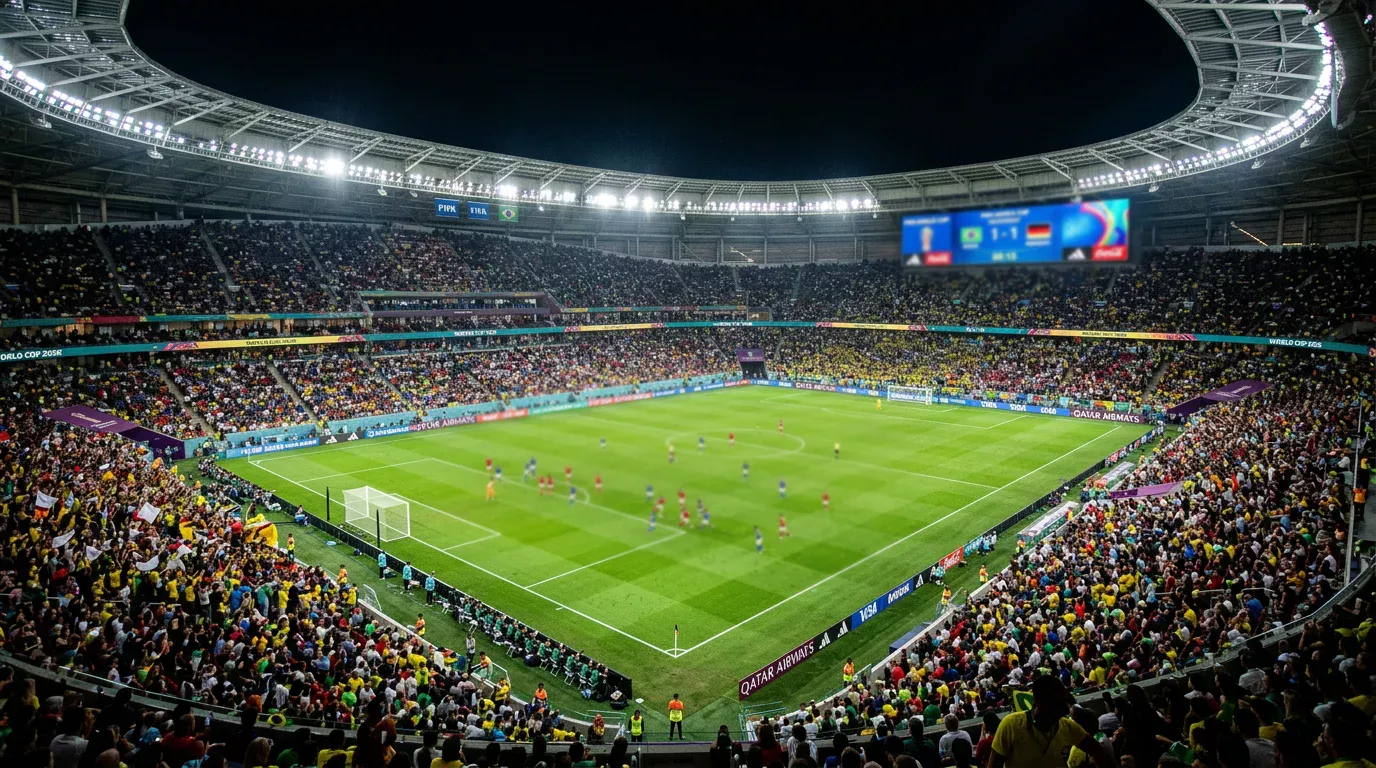
Golden Boot (top scorer) markets add player-level wagering opportunities. The favorites typically include strikers from favored nations — Kylian Mbappé, Harry Kane, and Vinícius Júnior appear at the top of most boards. Historical data shows that Golden Boot winners average 5-6 goals in a tournament, and the expanded 48-team format could push that threshold higher as extra matches create more scoring opportunities for teams advancing deep into the bracket.
One pattern I've observed across multiple World Cups: value tends to exist in group winner markets for teams with favorable scheduling. A team that plays its first two matches against weaker opponents can clinch group position before the final matchday, allowing rotation and rest. Switzerland in Group B fits this profile — they face Qatar and Bosnia before meeting Canada, meaning they could theoretically secure advancement before the decisive fixture. Whether that's a positive or negative for Canada betting depends on Swiss motivation levels if qualification is already assured.
The full breakdown of current odds across all 48 teams, group winner markets, and player futures is available in the dedicated World Cup 2026 odds hub. That resource updates regularly as markets shift closer to kickoff. The remainder of this guide focuses on practical application — how to convert these numbers into informed wagering decisions.
Quick Guide to World Cup Bet Types
When I first started covering international tournaments, betting options were essentially limited to match winners and tournament outrights. The proliferation of online sportsbooks has exploded available markets — a single World Cup match now generates hundreds of betting opportunities. Before you dive into those markets, understanding the core bet types saves both confusion and money.
The most straightforward bet is the moneyline (called match result or 1X2 in some markets). You're selecting whether the home team wins, the away team wins, or the match ends in a draw. World Cup group stage matches can end in draws; knockout matches require extra time and potentially penalties, so those markets typically exclude draws. A moneyline bet on Brazil at 1.45 returns $145 on a $100 wager if Brazil wins.
Spread (Handicap) — A bet where one team receives a virtual goal advantage or disadvantage. Brazil -1.5 means Brazil must win by 2+ goals for the bet to cash. Canada +0.5 against Switzerland means Canada wins or draws.
Over/Under (Totals) bets focus on combined goals rather than match outcome. A market set at 2.5 goals asks whether both teams will combine for 3+ goals (over) or 2 or fewer (under). World Cup group stages historically average around 2.6 goals per match, though the expanded format's additional games against lower-tier opponents could push this average higher in 2026.
Prop bets isolate specific events within a match: first goalscorer, number of cards, corner kicks, individual player shots on target. These markets carry higher margins than core lines but allow you to leverage specific knowledge about player tendencies or tactical matchups. Betting on Alphonso Davies to register an assist against Bosnia, for example, capitalizes on his overlapping runs from left-back rather than predicting the overall match result.
Parlays (called accumulators in European markets) combine multiple selections into a single bet with multiplied odds. A two-leg parlay requires both selections to win; a four-leg parlay needs all four. The higher potential payout comes with significantly reduced probability — I generally advise limiting World Cup parlays to correlated outcomes within the same match rather than combining unrelated fixtures.
Each of these bet types applies to World Cup markets in specific ways. Understanding the strategic considerations for each format — when spreads offer better value than moneylines, which prop markets carry the lowest margins, how to structure parlays for tournament wagering — separates recreational bettors from those who approach the World Cup with genuine analytical rigor.
Key Dates & Match Schedule Highlights
I learned early in my career that tournament scheduling isn't just logistics — it's a betting variable. Rest days between matches, travel distances, kickoff times, and venue assignments all influence performance. The 2026 World Cup schedule spans 39 days across three countries, creating more scheduling complexity than any previous edition. Here's what matters for your wagering calendar.
The tournament opens on June 11 with Mexico facing South Africa at Estadio Azteca in Mexico City. That match carries symbolic weight as the first fixture of the expanded 48-team era, and the atmosphere in one of football's most iconic venues will be electric. For betting purposes, note that Azteca's 2,240-meter altitude creates measurable effects on player stamina and ball flight — teams accustomed to sea-level play historically underperform in Mexico City.
Canada's campaign begins June 12 against Bosnia and Herzegovina at BMO Field in Toronto. This is the match that Canadian bettors will circle first — a winnable opener against tournament debutants in front of a partisan home crowd. The 3:00 PM ET kickoff means peak live-betting activity during afternoon hours, with markets moving rapidly based on early match developments.
The group stage runs through June 29, with each team playing three matches over 12-15 days depending on scheduling. Rest periods between matches range from 3 to 5 days — enough recovery time that fixture congestion shouldn't significantly impact squad rotation decisions. However, travel distances within North America can be brutal: a team playing in Seattle on Matchday 2 and Miami on Matchday 3 covers nearly 4,400 kilometers between venues.
| Phase | Dates | Matches |
|---|---|---|
| Group Stage | June 11-29 | 48 |
| Round of 32 | July 1-4 | 16 |
| Round of 16 | July 5-8 | 8 |
| Quarterfinals | July 11-12 | 4 |
| Semifinals | July 15-16 | 2 |
| Third Place | July 18 | 1 |
| Final | July 19 | 1 |

The knockout bracket begins July 1 with the Round of 32 — a new phase necessitated by the 48-team format. Sixteen matches across four days narrow the field before the traditional Round of 16 commences July 5. From quarterfinals onward, the tournament mirrors previous World Cups: single-elimination matches with increasing stakes and tightening margins.
For Canadian bettors, time zone awareness prevents costly mistakes. Toronto operates on Eastern Time, meaning matches in Vancouver (Pacific Time) kick off three hours earlier locally than displayed in ET. A 3:00 PM ET match at BC Place translates to noon local time — a consideration for live betting if you're tracking crowd energy or atmospheric conditions.
Key viewing windows for most Canadian bettors: group stage matches cluster between 11:00 AM and 9:00 PM ET, with multiple simultaneous kickoffs on final matchdays to prevent collusion. Knockout rounds typically feature 3:00 PM and 6:00 PM ET starts, ensuring primetime coverage without late-night conflicts.
How to Use This Guide
Nine years of covering World Cup betting has taught me that information overload kills betting performance faster than any individual bad beat. This guide is structured to help you find exactly what you need without drowning in irrelevant analysis. Here's how the various sections and supporting pages fit together.
If you're primarily interested in Canada's tournament campaign, the Canada World Cup 2026 profile provides exhaustive coverage: squad analysis, key player breakdowns, tactical tendencies, match-by-match projections, and specific betting recommendations for all three group fixtures. That resource also covers Switzerland, Qatar, and Bosnia and Herzegovina in detail with head-to-head analysis.
For broader tournament coverage, the all 48 teams overview organizes qualified nations by confederation with odds tiers, key players, and betting assessments. This is particularly useful for identifying value in markets beyond the obvious favorites — teams like Japan, Morocco, and Colombia regularly offer better risk-adjusted returns than top-tier sides at their prices.
The odds and betting strategy content follows a logical progression. Start with current market prices in the dedicated odds section, understand bet types through the fundamentals guide, then apply tournament-specific tactics from the strategy resources. Each page builds on previous concepts without requiring you to read everything sequentially.
Throughout the guide, I use specific formatting conventions to highlight key information. Tables present data for quick comparison. Key takeaway boxes summarize essential points within longer sections. Glossary terms define betting jargon where it first appears. Fun facts add context without cluttering analytical content. Internal links direct you to detailed resources when a topic exceeds what's appropriate for an overview section.
All content reflects the April 2026 information environment — current squad compositions, market prices, and regulatory status. I'll update critical sections as the tournament approaches, particularly once final squad announcements occur in May 2026. Bookmark this hub as your starting point and check back regularly for revised projections as new information becomes available.
Frequently Asked Questions
Is betting on the 2026 World Cup legal in Canada?
Yes. Single-game sports betting became legal across Canada in August 2021 following the passage of Bill C-218 (the Safe and Regulated Sports Betting Act). Each province regulates its own market — Ontario offers the widest selection of licensed private operators through iGaming Ontario, while other provinces channel wagering through provincial lottery corporations like Playnow (British Columbia) or Proline+ (Ontario). Alberta opened to private operators in January 2026. All regulated platforms offer World Cup betting markets including futures, match results, props, and live wagering.
What odds format do Canadian sportsbooks use?
Canadian sportsbooks default to decimal odds, the format where your total return equals your stake multiplied by the odds (a $100 bet at 2.50 returns $250 total). However, American moneyline format (+150, -200) frequently appears alongside decimals due to the influence of US-based operators like DraftKings and FanDuel in the Ontario market. Most platforms allow you to toggle between formats in account settings. For World Cup betting, consistency matters more than format — pick one and use it for all line comparisons.
When does the 2026 World Cup start and end?
The tournament runs June 11 through July 19, 2026. Mexico hosts the opening match (Mexico vs South Africa at Estadio Azteca on June 11), while the final takes place at MetLife Stadium in New Jersey on July 19. Canada's first match is June 12 against Bosnia and Herzegovina at BMO Field in Toronto. The group stage concludes June 29, with knockout rounds beginning July 1 and running through the final.
How many teams are in the 2026 World Cup?
The 2026 FIFA World Cup features 48 teams — an expansion from the 32-team format used since 1998. Teams are divided into 12 groups of four. The top two from each group advance to the Round of 32, along with the eight best third-place finishers. This means 32 of 48 teams (66.7%) reach the knockout phase, significantly higher than the 50% advancement rate under the previous format. The expansion affects betting mathematics throughout the tournament.
Which group is Canada in for the 2026 World Cup?
Canada is in Group B alongside Switzerland, Qatar, and Bosnia and Herzegovina. Canada plays all three group matches at domestic venues: vs Bosnia and Herzegovina on June 12 at BMO Field in Toronto; vs Qatar on June 18 at BC Place in Vancouver; vs Switzerland on June 24 at BC Place. This scheduling gives Canada a unique home-field advantage that no other team in the tournament enjoys for all group matches.
What are Canada's odds to win the 2026 World Cup?
Canada typically trades between 81.00 and 101.00 to win the tournament outright, implying roughly a 1% probability. More realistic Canada-specific markets focus on group advancement (around 1.40-1.55, reflecting 65-70% implied probability), reaching the quarterfinals (4.50-6.00), or topping Group B (2.60-3.00, behind Switzerland who prices as group favorite at 1.90-2.10). Home advantage provides measurable value that futures markets haven't fully priced.
Where can I watch World Cup matches in Canada?
Broadcast rights in Canada are held by major networks — TSN, CTV, and streaming platforms typically carry matches. Most sportsbooks also offer live streaming for account holders with positive balances, allowing you to watch and bet simultaneously. For specific channel listings and streaming options, check your cable provider closer to the tournament start date. Matches kick off between 11:00 AM and 9:00 PM ET during group stages, with knockout rounds typically at 3:00 PM and 6:00 PM ET.
