
World Cup 2026 Betting
BMO Field — Toronto's World Cup 2026 Venue & Matches
 Available in US
Loading...
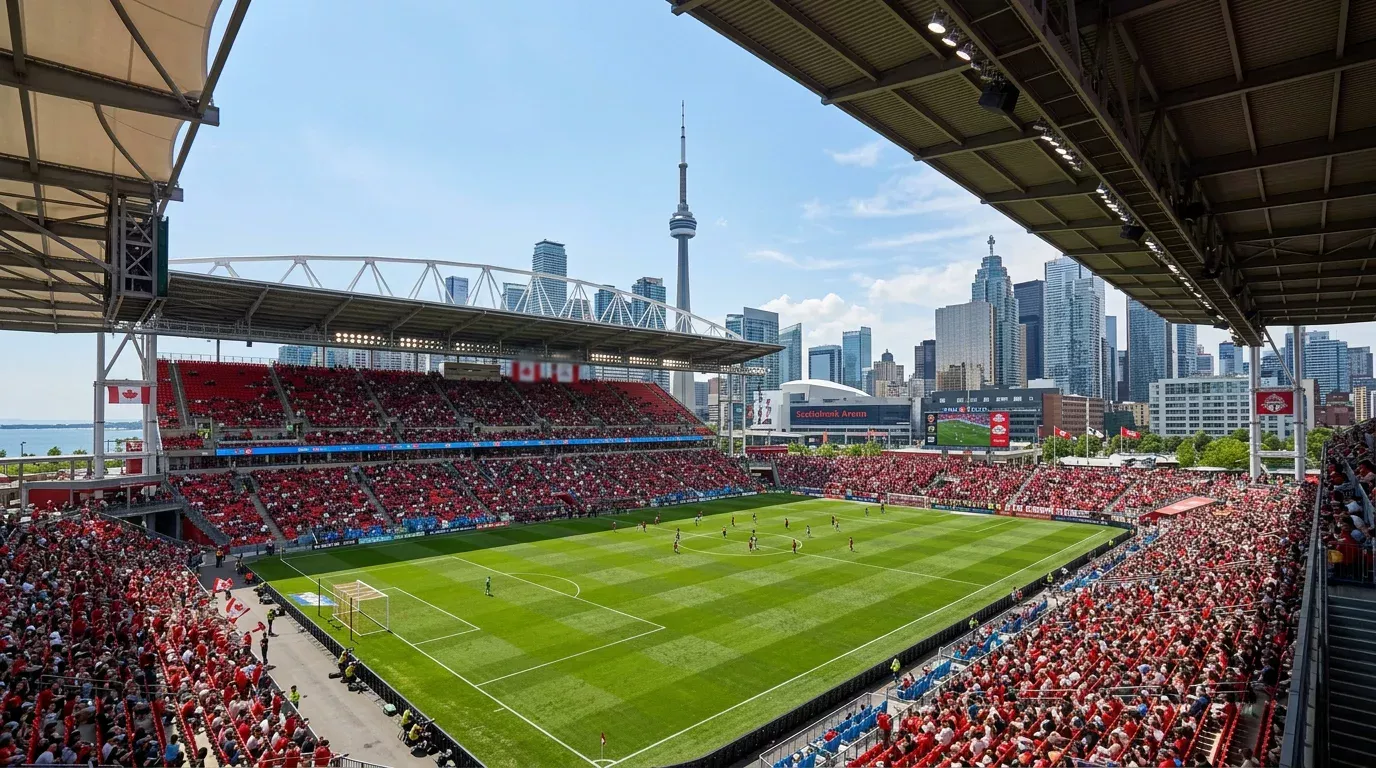
I walked through BMO Field during a Toronto FC match last September, trying to imagine the stadium transformed for World Cup duty. The bones were there — sight lines that put fans close to the pitch, acoustics that amplify crowd noise, a location that places international football in the heart of Canada’s largest city. But FIFA’s requirements demanded more than good bones. The renovations I saw in progress that evening, and the expanded infrastructure I’ve since watched materialize, confirm that BMO Field will deliver a World Cup experience worthy of the tournament’s scope. For bettors evaluating Canada’s home matches, understanding this venue provides edges that spreadsheets alone cannot capture.
About BMO Field — History and Specifications
BMO Field opened in 2007 as the first soccer-specific stadium built in Canada, and that original purpose shapes every aspect of how the venue functions during high-stakes matches.
The stadium sits on the grounds of Exhibition Place, a 192-acre event complex along Toronto’s waterfront that has hosted Canadian gatherings since 1879. The original BMO Field configuration held 20,000 supporters in an open-air bowl designed specifically for Major League Soccer’s Toronto FC. Unlike multipurpose venues that retrofit soccer configurations into American football or baseball footprints, BMO Field’s pitch positioning was optimized from inception for rectangular-sport sight lines. The result places front-row seats within 6 metres of the touchline — intimate proximity that European venues rarely match and American football stadiums cannot replicate.
The 2014-16 renovation cycle transformed BMO Field from soccer-specific venue to hybrid stadium capable of hosting the Toronto Argonauts of the Canadian Football League. That expansion added a second deck on the east side, enclosed the north end with additional seating, and installed a partial canopy roof that covers approximately 70% of spectator areas. Capacity expanded to 30,000 for soccer configurations, though CFL setup allows 25,000 due to the larger playing surface requirements. The hybrid infrastructure created challenges that the World Cup renovations had to address — FIFA’s requirements for media facilities, broadcast positions, and supporter segregation demanded modifications to structures built for different sports.
The natural grass playing surface at BMO Field sits on a sophisticated drainage and heating system that maintains pitch quality through Toronto’s variable climate. Unlike the artificial turf used at BC Place, BMO Field’s grass surface meets FIFA’s Category 4 standards for international matches without modification. The pitch dimensions — 105 metres by 68 metres — match FIFA’s preferred specifications exactly, eliminating the adjustment period that players sometimes need when moving between non-standard field sizes.
For the 2026 World Cup, BMO Field capacity has been expanded to approximately 45,000 through temporary seating installations in the south end zone and additional decking on the west side. These temporary structures maintain the stadium’s intimate atmosphere while providing the ticket inventory that FIFA requires for group stage matches. The renovation timeline, completed in early 2026, included expanded concourse areas, upgraded washroom facilities, and enhanced accessibility features throughout the venue.
World Cup 2026 Matches at BMO Field
The match allocation at BMO Field places Canada’s tournament opener in Toronto, creating the home atmosphere that betting analysis must consider when evaluating CanMNT odds.
Canada versus Bosnia and Herzegovina on June 12 at 3:00 PM ET serves as the defining moment for BMO Field’s World Cup hosting. This Friday afternoon kickoff means downtown Toronto offices will empty early, streetcars along King Street will overflow with red-and-white supporters, and the 45,000 seats inside BMO Field will generate an atmosphere unlike anything the venue has experienced. The significance extends beyond sporting occasion — this match represents Canada’s first World Cup group stage game on home soil, a milestone that previous generations of Canadian football supporters could only imagine. Betting markets should account for the emotional intensity that 45,000 Canadians will bring to this fixture.
Switzerland versus Bosnia and Herzegovina on June 18 brings European football to Toronto without Canadian involvement. The Nati’s organized Swiss supporters — famous for their cowbell-ringing, flag-waving presence — will likely outnumber Bosnian fans given Switzerland’s larger population and established football travel culture. This fixture’s 6:00 PM ET kickoff slots into evening viewing for Toronto’s financial district crowd, though the atmosphere will differ markedly from Canada’s opener three days earlier.
Qatar versus Bosnia and Herzegovina on June 24 concludes BMO Field’s group stage hosting with a match that could carry third-place implications or become a dead rubber depending on earlier results. Neither team possesses significant diaspora populations in the Greater Toronto Area, meaning crowd composition will depend heavily on neutral football supporters seeking affordable World Cup tickets. The 3:00 PM ET kickoff limits weekday attendance for working Torontonians, potentially creating a more subdued atmosphere than the first two BMO Field matches.
The venue has been allocated three group stage matches total, with no knockout round fixtures currently scheduled. Should BMO Field’s group stage hosting prove successful, FIFA retains flexibility to add round of 32 matches if American venue conflicts arise — though this possibility remains speculative rather than scheduled.
Stadium Upgrades for the World Cup
FIFA’s venue requirements forced transformations that permanent BMO Field infrastructure alone couldn’t satisfy, and understanding these modifications explains why Canada’s home advantage extends beyond crowd noise.
The temporary seating expansion represents the most visible change. Steel structures now extend the south end zone seating from field level to match the existing north end height, adding approximately 12,000 seats to the pre-renovation capacity. These temporary stands include the same sightline engineering as permanent sections — fans in temporary seats see the pitch at angles no worse than premium main-stand positions. The construction timeline compressed what typically requires 18 months into 10 months of accelerated work, with completion certified by FIFA inspectors in March 2026.
Broadcast infrastructure upgrades installed at BMO Field exceed previous Major League Soccer requirements by substantial margins. The new press box accommodates 500 journalists — five times the MLS standard — while broadcast gantry positions support 40 camera setups compared to the previous 12. These technical enhancements produce better television coverage, but they also concentrate global media attention on matches played at BMO Field, creating visibility that Canadian football development has historically lacked.
Player facilities received complete overhauls to meet FIFA standards. The dressing rooms now include individual player workstations rather than shared bench seating, expanded medical treatment areas with equipment matching Champions League finals requirements, and separate facilities for match officials that include VAR review rooms for on-field consultation. These upgrades become permanent infrastructure post-tournament, transforming BMO Field into a FIFA Category 4 venue capable of hosting future international matches without additional modification.
Supporter experience improvements address the crowd flow challenges that Exhibition Place’s location historically created. New pedestrian bridges connect BMO Field to the Liberty Village neighbourhood, reducing pre-match congestion along Manitoba Drive. Expanded transit connections include dedicated streetcar platforms that load directly into venue entry gates, with TTC service patterns modified to handle 45,000 arrival and departure windows in 90-minute periods.
Toronto as a World Cup Host City
The venue matters, but the city surrounding it shapes match-day experiences in ways that bettors evaluating home advantage should understand.
Toronto’s population of 2.9 million — 6.7 million in the Greater Toronto Area — makes it the largest metropolitan region hosting World Cup 2026 matches outside the United States. The city’s multicultural composition produces supporter bases for virtually every participating nation: significant Portuguese, Italian, German, and English diasporas; growing South American communities including substantial Colombian and Brazilian populations; and established African communities whose second-generation Canadians now play for nations like Ghana and Morocco. This diaspora diversity means every World Cup match at BMO Field will feature organized supporter sections for both teams, even when Canada isn’t involved.
The downtown core’s proximity to BMO Field — approximately 3 kilometres east along the lakeshore — allows supporters to walk from major hotels to the venue in 40 minutes. The Entertainment District’s concentration of sports bars, restaurants, and public viewing areas creates pre-match and post-match gathering spaces that most World Cup venues lack. Liberty Village, the residential neighbourhood immediately north of BMO Field, has evolved into a football-focused community since Toronto FC’s 2007 arrival, with pubs and cafés that serve as de facto supporter headquarters year-round.
June weather in Toronto averages 23°C highs with moderate humidity — comfortable conditions for players and supporters accustomed to European or North American climates. The 3:00 PM and 6:00 PM kickoff times at BMO Field place matches in late-afternoon and early-evening windows, avoiding the midday heat that affects Miami and Houston venues. Weather-related variables remain minimal at BMO Field; the partial roof covering protects spectators from typical June rain showers without creating the enclosed-stadium acoustics that sometimes work against supporters.
For betting purposes, Toronto’s hosting factors create tangible home advantage for Canada. The 45,000-seat capacity will sell out for Canada matches within minutes of public release, with the vast majority of tickets held by Canadian supporters rather than opposing fans. BMO Field’s existing reputation as one of MLS’s most hostile road environments — Toronto FC’s home record since 2007 demonstrates consistent advantage — translates directly to World Cup atmosphere.
Betting Context — Home Matches for Canada
Strip away the emotional narratives and BMO Field’s impact on betting markets becomes quantifiable through factors that spreadsheets can capture.
Canada’s home record since Jesse Marsch took charge tells the clearest story: 17 matches, 14 wins, 2 draws, 1 loss. That single defeat came against the United States in a 2024 CONCACAF Nations League semifinal played at AT&T Stadium in Texas — technically a neutral venue despite the American connection. On actual Canadian soil, Marsch’s side has won 12 and drawn 2 of their 14 home fixtures. The sample size approaches statistical significance, and the results suggest genuine home advantage rather than random variance.
The specific BMO Field subset shows similar patterns. Toronto FC’s MLS record at BMO Field includes five seasons with home winning percentages above 60%, demonstrating that the venue creates measurable advantages independent of team quality fluctuations. Canadian national team matches at BMO Field since 2021 have produced eight wins, two draws, and zero losses — a run that includes victories over Honduras, El Salvador, and Jamaica during World Cup qualifying.
Market pricing for Canada’s BMO Field match against Bosnia reflects these factors, with current moneyline odds around 1.65 for Canada, 4.50 for Bosnia, and 3.80 for the draw. Those prices imply approximately 55% probability of Canadian victory, 20% for Bosnia, and 25% for a draw. My assessment places Canada’s true probability closer to 60%, making the current moneyline marginally attractive. The over/under line of 2.5 goals feels accurately priced around even money — Canada’s aggressive pressing generates chances, but Bosnia’s defensive organization limits easy transitions.
For deeper analysis of Canada’s squad composition, tactical approach, and tournament ceiling, the Canada World Cup page provides comprehensive breakdowns that complement this venue-specific assessment.
