World Cup 2026 Betting
World Cup 2026 Groups — All 12 Groups, Schedules & Predictions
 Available in US
Loading...
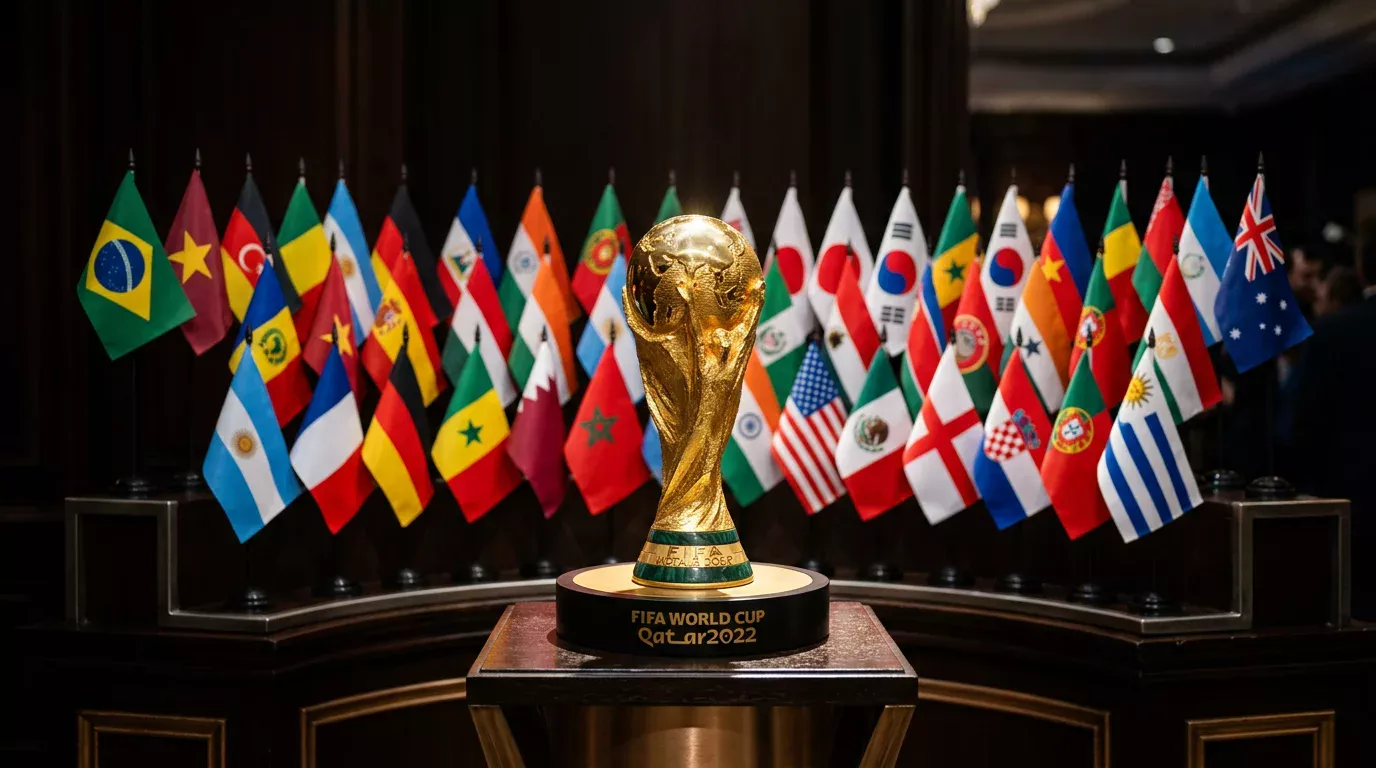
December’s draw ceremony in Zurich took exactly two hours to sort 48 nations into 12 groups of four. For nine years covering World Cup betting markets, I have watched draw shows with one eye on the screen and another on odds movements — the instant a ball drops, futures prices shift, and the tournament’s betting landscape reshapes. The 2026 World Cup groups presented unique challenges because no draw in history has attempted to organize this many teams while respecting FIFA’s geographic separation rules and host nation placement requirements.
What emerged from that ceremony defines every group-stage betting angle for the months ahead. Twelve groups labeled A through L, each containing four teams that will play round-robin fixtures from June 11 through June 29. The top two teams from each group advance automatically to the Round of 32, while the eight best third-place finishers also progress — a wrinkle that fundamentally changes group-stage dynamics compared to every previous World Cup format. This guide breaks down all 12 groups at the 2026 World Cup with schedules, predictions, and the betting angles that matter most for Canadian bettors approaching the tournament.
Group-Stage Format — How the 48-Team Structure Works
I spoke with a casual soccer fan last month who assumed the expanded World Cup simply meant more group-stage matches. That undersells the structural changes. The 48-team format alters qualification incentives, tiebreaker scenarios, and optimal betting strategies in ways that demand explicit attention before examining individual groups.
Each group contains four teams playing three matches — one against each opponent. Three points reward a win, one point rewards a draw, and zero points come from defeat. This structure matches previous World Cups, but the advancement rules differ substantially. Rather than advancing only two teams per group, the 2026 format progresses 24 automatically: the top two finishers from each of 12 groups. Additionally, eight third-place teams advance based on cross-group performance metrics.
This third-place advancement rule transforms group-stage incentives. In past World Cups, finishing third meant elimination — full stop. Teams in danger of third place had nothing to lose in final group matches, often producing chaotic results. Now, finishing third can still mean advancement if your points and goal difference compare favourably against third-place teams from other groups. A team locked into third place may still play for maximum goal difference rather than accepting their fate, knowing that tiebreakers among third-place teams determine which eight advance.
The mechanics for third-place comparison follow standard FIFA tiebreaker protocols: points earned first, then goal difference, then goals scored. If teams remain level, head-to-head results do not apply because third-place teams from different groups never played each other. Instead, fair play points and ultimately random drawing decide ties. Practically, this means goal difference carries enormous weight for third-place teams — a consideration that should inform totals betting when teams fight for advantageous tiebreaker position.
Group-stage scheduling follows a now-familiar pattern. All four teams in each group play their first match on the same day or consecutive days. Matchday two sees fixtures separated by several days, allowing recovery time. Matchday three features simultaneous kickoffs for both matches within each group, preventing teams from knowing exactly what results they need before their own match begins. For bettors, matchday three presents the most complex scenarios — and often the most exploitable inefficiencies as markets struggle to price multi-outcome contingencies correctly.
The expanded format also concentrates weaker teams at tournament level. Roughly sixteen teams qualified for 2026 that would have missed a 32-team World Cup. These teams — tournament debutants, intercontinental playoff survivors, and nations whose confederations received expanded allocations — often face stark talent gaps against traditional powers. Group-stage betting should account for these mismatches explicitly rather than assuming competitive balance across all fixtures.
Groups A Through D — Americas and European Mix
The first four groups establish the tournament’s early storylines, with all three host nations making their appearances. Mexico opens the entire tournament from Group A at Estadio Azteca. Canada welcomes Group B to Toronto and Vancouver. The United States faces Group D opponents at SoFi Stadium and other American venues. Group C features Brazil as the standout favourite while Morocco tests whether their 2022 semifinal run translated to sustained competitive capability.
Group A — Mexico, South Korea, South Africa, Czechia
Mexico’s opening match on June 11 kicks off not just their group but the entire World Cup. That emotional weight benefits El Tri — Estadio Azteca will be deafening, and opposition teams face adjustment to altitude and atmosphere simultaneously. South Korea brings Asia’s second-strongest tournament pedigree after Japan, with Son Heung-min leading an attack capable of troubling any defense. South Africa returns to the World Cup stage for the first time since hosting in 2010, arriving with reduced expectations but genuine competitive organization. Czechia qualified through UEFA playoffs, demonstrating resilience that translates to tournament environments.
Predicted finish: Mexico first, South Korea second, with South Africa and Czechia contesting third place. Mexico’s home advantage combined with South Korea’s consistent tournament competence should determine the top positions. Betting angles focus on Mexico’s opening match — heavy favourite territory that creates value only on Asian handicaps covering significant margins — and South Korea’s consistency as a group-stage performer who rarely upsets outright favourites but almost never falls to significant underdogs.
Group B — Canada, Switzerland, Qatar, Bosnia and Herzegovina
Canadian bettors will follow Group B more intensely than any other, and the draw provides realistic advancement paths. Switzerland enters as group favourites based on FIFA ranking and recent tournament history — quarterfinal appearances have become routine for the Swiss, whose defensive organization frustrates more talented opponents. Canada plays every match on home soil between Toronto and Vancouver, an advantage no simulation can fully quantify. Qatar brings 2022 hosting experience but also the reminder that they finished bottom of their own World Cup group. Bosnia and Herzegovina make their tournament debut after defeating Italy in playoff penalties — a mental test that should prepare them for World Cup pressure.
Predicted finish: Switzerland first, Canada second, Bosnia third, Qatar fourth. The World Cup 2026 Group B analysis suggests closer margins than these rankings imply. Canada’s home advantage could flip the Switzerland-Canada ordering if the June 24 direct fixture unfolds with both teams already advanced. Bosnia’s debutant status creates uncertainty that betting markets may price incorrectly. Qatar’s away performance historically trails their home results substantially, suggesting they represent the weakest link despite their 2022 experience.
Group C — Brazil, Morocco, Haiti, Scotland
Brazil’s five World Cup titles make them perpetual contenders, and their Group C draw appears favourable despite Morocco’s 2022 semifinal credentials. Morocco proved they belong at the highest level, but reproducing that performance requires sustaining defensive excellence across another tournament cycle. Haiti makes only their second World Cup appearance since 1974, arriving as massive underdogs but representing Caribbean football’s continued development. Scotland returns to the World Cup for the first time since 1998, bringing passionate support and competitive organization without the attacking firepower to threaten top-tier opponents.
Predicted finish: Brazil first, Morocco second, Scotland third, Haiti fourth. Brazil should dominate, but their opening fixture against Morocco carries genuine uncertainty. Morocco could exceed expectations again if their system remains intact under Walid Regragui. Scotland’s path to advancement requires upsetting either Brazil or Morocco — unlikely but not impossible given Scotland’s historical capacity for one-off giant-killing performances.
Group D — USA, Paraguay, Australia, Turkey
The United States enters their home World Cup with sky-high expectations and a group draw that should reward them. Paraguay qualified from CONMEBOL but represents a weaker South American contingent than Uruguay or Colombia. Australia brings AFC experience and a system designed to frustrate rather than dominate. Turkey qualified through UEFA playoffs, demonstrating European-level competitiveness and carrying passionate diaspora support across North American venues.
Predicted finish: USA first, Turkey second, Australia third, Paraguay fourth. American home advantage should secure comfortable advancement, but Turkey’s quality suggests they could push for first place if the USMNT underperforms. Australia’s defensive approach creates low-scoring matches that reward unders betting. Paraguay’s CONMEBOL pedigree provides baseline competitiveness but likely insufficient firepower against European and North American opponents playing at home.
Groups E Through H — Powerhouses and Underdogs
Four groups containing traditional European powers alongside tournament newcomers and African nations testing whether continental improvement translates to World Cup stages. Germany seeks redemption from consecutive group-stage exits. The Netherlands continues rebuilding toward contender status. Belgium’s golden generation enters possibly their final collective tournament. Spain balances youth and experience while chasing their second World Cup title.
Group E — Germany, Ivory Coast, Ecuador, Curaçao
Germany’s four World Cup titles demand respect regardless of recent struggles. Die Mannschaft exited in 2018 and 2022 group stages — consecutive humiliations that have forced systematic rebuilding. This group offers rehabilitation opportunity: Ivory Coast brings CAF quality but inconsistent tournament execution, Ecuador provides CONMEBOL physicality, and Curaçao represents their first World Cup appearance. Germany should advance comfortably, but their opening fixture mentality has produced shocking results before.
Predicted finish: Germany first, Ivory Coast second, Ecuador third, Curaçao fourth. Germany’s talent should overwhelm this group, but backing them at short odds carries risk given their recent history. Ivory Coast’s attacking options create upset potential in any single match. Ecuador’s altitude-trained squad brings physical demands that European teams sometimes underestimate. Curaçao deserves respect as Caribbean football’s newest World Cup representative, even if advancement appears extremely unlikely.
Group F — Netherlands, Japan, Sweden, Tunisia
Group F presents the most competitive draw across all twelve groups. Netherlands carries the burden of three World Cup finals without a title, a history that weighs on every tournament approach. Japan demonstrated in 2022 that their system challenges European tacticians — they beat both Germany and Spain before losing to Croatia on penalties. Sweden’s physical, direct approach creates difficult matchups for technically superior opponents. Tunisia brings CAF experience and defensive organization capable of frustrating any attack for 90 minutes.
Predicted finish: Japan first, Netherlands second, Sweden third, Tunisia fourth. This prediction diverges from FIFA rankings, but Japan’s recent tournament performance supports their candidacy for group leadership. Netherlands’ tactical rigidity could struggle against Japanese pressing and Swedish physicality. Sweden and Tunisia should produce the group’s most competitive third-place race, with Sweden’s set-piece threat providing marginal advantage.
Group G — Belgium, Iran, New Zealand, Egypt
Belgium’s golden generation has never won a major tournament, and 2026 represents likely their final collective opportunity. Kevin De Bruyne remains world-class, but the supporting cast has aged without adequate replacement. Iran brings AFC quality and defensive discipline that historically frustrates more talented opponents for extended periods. New Zealand returns to the World Cup for the first time since 2010, representing OFC as its sole automatic qualifier. Egypt’s qualification adds Mohamed Salah to the tournament — a top-ten player globally whose individual brilliance can overcome systemic limitations.
Predicted finish: Belgium first, Egypt second, Iran third, New Zealand fourth. Belgium should advance despite reduced expectations, but their ceiling appears lower than previous cycles. Egypt’s Salah-dependent attack creates variance — when he performs, Egypt competes; when marked out, they struggle. Iran’s system should collect points against New Zealand and potentially Egypt. New Zealand’s expanded-format opportunity requires either Belgium underperformance or Egyptian collapse.
Group H — Spain, Saudi Arabia, Uruguay, Cape Verde
Spain enters Group H as clear favourites with a squad blending 2010 World Cup-winning experience and emerging youth talent. Pedri, Gavi, and Lamine Yamal represent Spain’s future, already competing at elite club levels. Saudi Arabia’s 2022 opening-match victory over Argentina demonstrated their capability against top opposition, though sustaining that level across tournament matches remains uncertain. Uruguay brings CONMEBOL grit and a historical pedigree — two World Cup titles, though both from before most bettors were born. Cape Verde makes their World Cup debut, representing the smallest nation in the tournament by population.
Predicted finish: Spain first, Uruguay second, Saudi Arabia third, Cape Verde fourth. Spain’s technical dominance should secure comfortable advancement. Uruguay’s physical approach and Darwin Núñez’s attacking threat position them above Saudi Arabia despite the latter’s 2022 heroics. Saudi Arabia’s away form historically trails their home performances, a concerning pattern for a tournament without Asian venues. Cape Verde’s historic qualification overshadows realistic advancement chances.
Groups I Through L — Contenders and Newcomers
The final four groups contain three tournament favourites — France, Argentina, and England — alongside African nations, European challengers, and tournament debutants. These groups should produce the clearest advancement predictions while also featuring the largest talent gaps between group leaders and group trailers.
Group I — France, Norway, Senegal, Iraq
France arrives as defending 2022 finalists with a squad depth no other nation matches. Kylian Mbappé headlines an attack capable of overwhelming any defense, while the midfield and defensive structures have matured through recent tournament cycles. Norway qualified with Erling Haaland leading the line — perhaps the world’s most prolific striker, whose World Cup debut carries enormous anticipation. Senegal brings CAF’s second-strongest credentials after Morocco, with a system that produced 2022 Round of 16 advancement. Iraq returns to the World Cup through intercontinental playoffs, representing decades of football rebuilding after national challenges.
Predicted finish: France first, Senegal second, Norway third, Iraq fourth. France should dominate, but their opening fixture against Senegal carries genuine uncertainty given Senegal’s defensive capabilities. Norway’s Haaland could score in every match while Norway still finishes third if supporting cast cannot convert territorial dominance. Iraq’s qualification represents triumph; their advancement would require results that historical patterns do not support.
Group J — Argentina, Algeria, Austria, Jordan
Argentina defends their 2022 World Cup title from a group draw that appears manageable. Lionel Messi enters what will almost certainly be his final World Cup, adding narrative weight to every fixture. Algeria’s CAF qualification demonstrated renewed competitiveness, though their 2014 Round of 16 appearance remains their peak World Cup performance. Austria brings Bundesliga-trained tactical discipline and a squad comfortable in competitive European environments. Jordan makes their World Cup debut, representing AFC expansion and regional football development.
Predicted finish: Argentina first, Austria second, Algeria third, Jordan fourth. Argentina’s defending-champion status should translate to comfortable group advancement. Austria’s European quality positions them above African and Asian opponents. Algeria’s path to advancement requires either Argentine underperformance or Austrian collapse — both unlikely. Jordan’s historic participation deserves celebration regardless of group-stage results.
Group K — Colombia, Portugal, Uzbekistan, DR Congo
Group K presents fascinating dynamics with Colombia and Portugal competing for group leadership while Uzbekistan and DR Congo fight for third-place advancement possibilities. Colombia’s CONMEBOL qualification exceeded expectations, with Luis Díaz emerging as one of Europe’s most dangerous wingers. Portugal continues navigating generational transition, with Cristiano Ronaldo’s diminishing role creating tactical questions about attacking identity. Uzbekistan represents AFC through their first World Cup qualification. DR Congo qualified through intercontinental playoffs, bringing CAF physicality to their tournament debut.
Predicted finish: Colombia first, Portugal second, Uzbekistan third, DR Congo fourth. Colombia’s current form suggests they could finish above traditionally higher-ranked Portugal. Portugal’s transition uncertainty creates opening for Colombian group leadership. Uzbekistan and DR Congo should produce competitive third-place racing, with Uzbekistan’s AFC qualifying experience providing marginal advantage.
Group L — England, Croatia, Ghana, Panama
Group L features two teams with extensive World Cup history — England’s 1966 title and Croatia’s 2018 finalist run — alongside Ghana’s African ambitions and Panama’s CONCACAF representation. England enters every tournament as public favourite despite consistent knockout-round disappointment. The Three Lions’ current squad includes Harry Kane, Jude Bellingham, and emerging talents who have developed through European elite competitions. Croatia demonstrates that midfield control and big-match mentality overcome population-size limitations. Ghana brings attacking talent and African confederation experience. Panama returns to the World Cup for a third consecutive edition.
Predicted finish: England first, Croatia second, Ghana third, Panama fourth. England’s squad depth should secure advancement, though their opening Croatia fixture carries genuine uncertainty. Croatia’s experience against English opponents provides institutional knowledge that betting markets may undervalue. Ghana’s path to advancement requires third-place positioning and favourable cross-group comparisons. Panama’s physical approach can frustrate opponents but unlikely provides sufficient quality for advancement against European competition.
Third-Place Qualification — The Eight Best of the Rest
Eight third-place teams advance to the Round of 32, creating advancement possibilities for teams that would face immediate elimination under previous formats. Understanding how third-place comparison operates helps identify groups where fighting for third carries meaningful advancement probability versus groups where third place almost certainly means going home.
Historical projections from 24-team European Championships — which use similar third-place advancement rules — suggest that four points virtually guarantees advancement as a third-place team. Three points typically advances, depending on goal difference and goals scored. One or two points rarely advances except in rare scenarios where multiple third-place teams finish with identical records.
Applied to 2026 World Cup groups, this means third-place teams from competitive groups like F (Netherlands, Japan, Sweden, Tunisia) likely need fewer points to advance than third-place teams from top-heavy groups like I (France, Norway, Senegal, Iraq). In competitive groups, losses against top teams carry less stigma because the same results affect all third-place contenders. In top-heavy groups, losing to the favourite while other third-place teams take points from their favourites creates comparative disadvantage.
Betting implications focus on matchday three scenarios. A team locked into third place with two points might still play aggressively for additional points and improved goal difference if their advancement remains mathematically possible. Conversely, a team locked into third with zero points has little incentive beyond pride — their advancement probability approaches zero regardless of final-match result. Tracking these scenarios across all 12 groups simultaneously exceeds casual analysis capacity but rewards systematic monitoring as matchday three approaches.
The groups most likely to produce advancing third-place teams based on competitive balance: Group F (Japan/Netherlands/Sweden/Tunisia competitive throughout), Group H (Spain dominant but Uruguay/Saudi Arabia/Cape Verde competitive below), and Group L (England/Croatia dominant but Ghana/Panama competitive below). Groups least likely to produce advancing third-place teams: Group E (Germany dominant, large gaps below), Group I (France dominant, Iraq overmatched), and Group J (Argentina dominant, Jordan overmatched).
Group of Death — Which Draw Looks Toughest
Every World Cup generates “group of death” discussions — the group where quality concentration punishes talented teams through cruel draw luck. The 2026 World Cup’s 12-group format dilutes this phenomenon compared to eight-group formats, but certain draws still present notably difficult paths for teams with legitimate tournament ambitions.
Group F qualifies most clearly as 2026’s group of death. Netherlands, Japan, Sweden, and Tunisia all possess the quality to advance from most other groups, but their collective draw means at least one strong team finishes fourth. Netherlands’ three World Cup finals without a title represent the stakes — another group-stage exit would devastate Dutch football expectations. Japan’s 2022 group-stage victories over Germany and Spain demonstrated their capability, but Group F presents equally difficult opposition in different forms. Sweden’s physicality creates matchup problems for technical sides like Japan and Netherlands. Tunisia’s defensive organization can frustrate any attack for 90 minutes.
Group L presents secondary “group of death” characteristics. England and Croatia both carry realistic semifinal expectations, meaning their direct fixture eliminates legitimate championship potential before knockout rounds begin. Ghana’s African pedigree and Panama’s CONCACAF consistency create additional competitive pressure. Unlike Group F, Group L features clearer talent separation between the top two and bottom two, but England-Croatia matches have historically produced dramatic results that defy pre-match expectations.
Group H deserves mention for Uruguay’s difficult positioning. Spain should dominate, but Uruguay’s path to advancement requires outperforming Saudi Arabia — a team that upset Argentina in 2022’s opening match — while navigating Cape Verde’s tournament-debut intensity. Uruguay’s historical pedigree demands advancement; their draw complicates that expectation.
For betting purposes, “group of death” designations suggest value on underdogs and unders. Competitive groups produce tense matches where both teams prioritize avoiding defeat over chasing victory. Goals come harder in these environments, and favourites struggle to cover spreads against desperate opponents fighting for tournament survival.
Group-Stage Betting Angles
Twelve groups generate 48 individual matches before knockout rounds begin — overwhelming volume that demands systematic rather than intuitive approaches. I have tracked World Cup group-stage betting patterns across three tournament cycles, and certain edges repeat consistently enough to structure pre-tournament strategy.
Matchday one produces elevated upset rates. Teams arrive with varying preparation quality based on confederation schedules, friendly match availability, and travel logistics. European teams typically arrive sharper than CONCACAF or AFC sides due to Nations League fixtures providing competitive matches closer to World Cup kickoff. Opening matches for host nations — Mexico’s June 11 opener, Canada’s June 12 opener, USA’s June 12 opener — carry additional emotional intensity that favours hosts but creates defensive vulnerability through over-commitment.
Matchday two adjusts based on matchday one results. Teams that lost opening fixtures face must-win pressure that typically produces more aggressive tactics and higher-scoring matches. Teams that won openers can manage matches more conservatively, protecting leads and accepting draws. Totals betting on matchday two should account for these situational factors rather than relying solely on team-level scoring projections.
Matchday three presents the most complex scenarios. Simultaneous kickoffs prevent information arbitrage, but pre-match analysis can identify teams with misaligned incentives. A team locked into first place may rest starters against a team fighting for second or third. A team eliminated may play freely without pressure, potentially producing chaotic results against opponents still needing specific outcomes. The World Cup 2026 schedule concentrates matchday three fixtures into compressed windows that reward preparation over improvisation.
Cross-group monitoring adds analytical value unavailable from isolated group analysis. Third-place advancement depends on comparing results across all 12 groups, meaning a team’s advancement probability fluctuates based on matches they do not play. Tracking goal difference across all third-place teams as group stages progress identifies which third-place positions carry genuine advancement probability versus which represent effective elimination.
Finally, host-nation dynamics deserve explicit consideration throughout group stages. Canada’s three home matches, Mexico’s three group-stage fixtures (two at home venues), and the United States’ group-stage path all benefit from crowd support, familiar conditions, and travel minimization. These factors compound across three matches in ways that single-game analysis underestimates. Backing CONCACAF hosts in group stages has generated positive expected value across recent World Cups when priced appropriately.
Setting Up Knockout Success
Group-stage results determine more than advancement — they establish knockout-round positioning that shapes paths to the Final. Winning your group typically produces more favourable Round of 32 draws than finishing second, though the 48-team format’s bracket structure differs from previous editions in ways still being calculated by serious analysts.
The Round of 32 pits group winners against third-place qualifiers and group runners-up against each other. This structure means teams finishing first avoid facing other group winners until at least the quarterfinals, while teams finishing second face immediate knockout-round tests against equivalent-quality opponents. The incentive to win groups extends beyond pride to bracket positioning that affects advancement probability through the tournament’s later stages.
For bettors, futures positioning should account for likely bracket paths. A team projected to finish second in a competitive group faces longer odds for tournament success not just because of their group performance but because their knockout path immediately includes another second-place team. Meanwhile, a team that dominates a weak group might face easier early-knockout opposition regardless of their true quality relative to teams in competitive groups.
Group-stage betting and futures betting connect through these bracket considerations. Identifying teams likely to overperform in group stages — dark horses that finish first instead of second, or strong teams drawn into weak groups — creates futures value as their bracket paths clarify. Conversely, backing teams likely to underperform group expectations — favourites in groups of death, or inconsistent powers facing motivated opponents — suggests futures caution regardless of pre-tournament odds.
The 12-group structure produces bracket asymmetries that systematic analysis reveals. Certain group winners draw into bracket halves containing other group winners, while others draw into halves with multiple third-place advancers. These bracket dynamics cannot be fully predicted before group stages complete, but understanding their existence helps position futures bets and group-stage wagers as integrated tournament strategy rather than isolated decisions.
