World Cup 2026 Betting
Germany at the 2026 World Cup — Group E Analysis & Betting Odds
 Available in US
Loading...
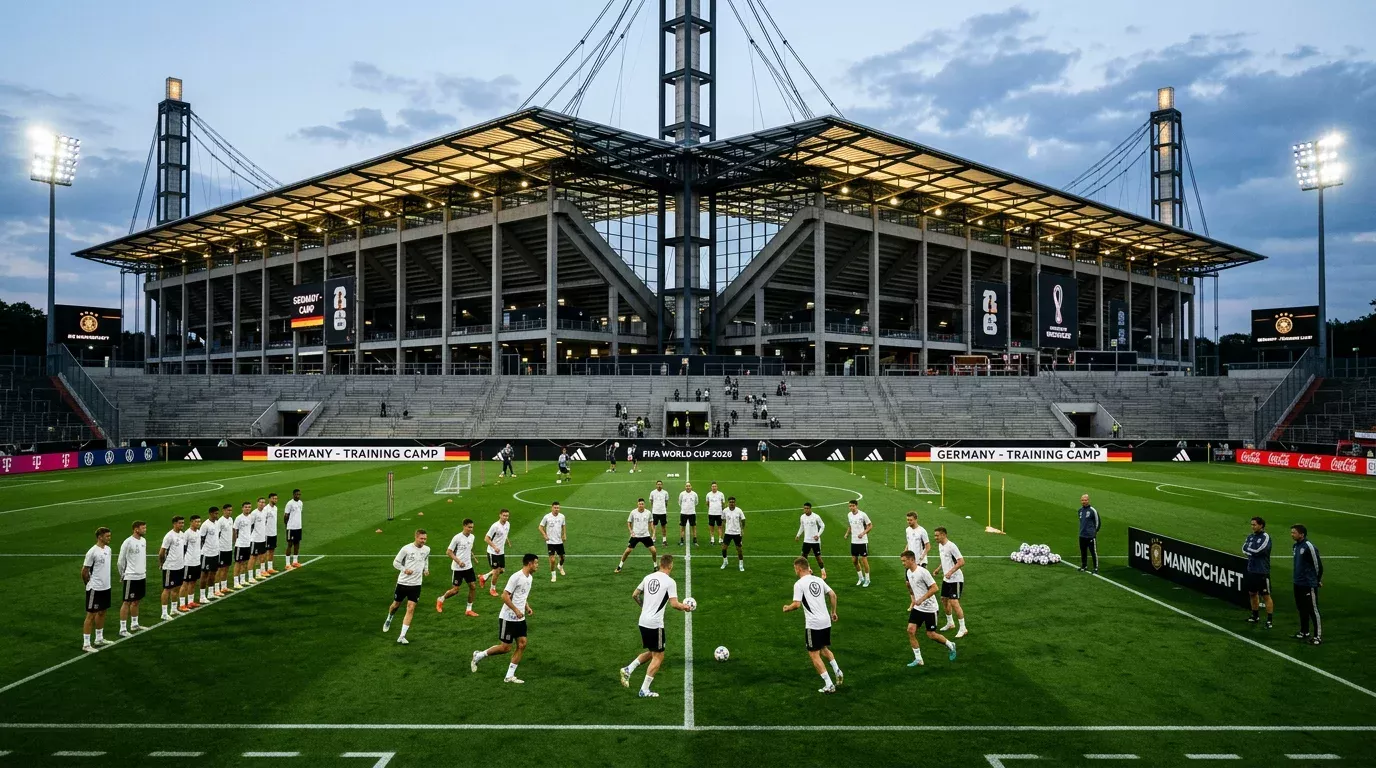
The rebuild continues. I remember watching Germany’s 2018 group stage exit to South Korea with a mixture of shock and inevitability — the defending champions, eliminated before the knockout rounds, Joachim Löw’s tactical stubbornness finally producing consequences. Six years later, after another group stage exit in Qatar and a home European Championship that ended in familiar disappointment, Germany arrives at the 2026 World Cup still searching for the identity that produced four World Cup titles. Die Mannschaft under new direction represents football’s most fascinating rebuilding project: undeniable individual talent, organizational uncertainty, and a nation desperate for validation after a decade of tournament frustration.
Group E pairs Germany with Ivory Coast, Ecuador, and Curaçao — a draw that provides the straightforward advancement path this squad needs to build confidence before knockout pressure arrives. The real test comes later, when German organization and composure face elimination scenarios that recent tournaments have handled poorly. For bettors evaluating World Cup 2026 odds markets, Germany represents the complex combination of historical pedigree, recent failure, and genuine uncertainty that creates both opportunity and risk in positioning.
Qualification via UEFA
German qualification through UEFA proceeded without significant drama, the squad accumulating sufficient points despite occasional performances that raised questions about tactical direction. The process confirmed individual quality that no observer doubts while highlighting collective organization issues that tournament football exposes more ruthlessly than qualification fixtures can.
The managerial transition that followed Euro 2024 brought philosophical changes still being integrated into the squad. New tactical approaches emphasize controlled possession and patient build-up rather than the vertical directness that characterized German football’s historical identity. Whether this evolution suits the available personnel remains debated among German football analysts and supporters who remember more assertive attacking approaches.
Squad rotation across qualification revealed depth that exceeds most European competitors. When primary starters rested, replacements performed at levels suggesting genuine competition for positions rather than clear hierarchies. This internal competition should produce improved performances as players recognize selection is earned rather than assumed, though the same dynamic risks disrupting chemistry if rotation becomes excessive.
Away fixtures across European venues tested German adaptability. Results against lower-ranked opponents came consistently, while matches against fellow contenders produced mixed outcomes that neither inspire confidence nor suggest disaster. The qualification campaign established baseline competence without resolving questions about championship potential that only knockout matches can answer.
Group E — Ivory Coast, Ecuador and Curaçao
Group E’s composition suggests German advancement should arrive without significant stress. Ivory Coast brings African physicality and Ligue 1 quality that demands respect, but the overall talent gap favors Germany clearly. Ecuador provides South American tactical discipline and altitude-conditioned fitness, though without the individual brilliance that European opposition can struggle against. Curaçao completes the group as tournament debutants whose presence reflects the expanded format rather than realistic knockout ambitions.
Ivory Coast represents the genuine group stage challenge. Sébastien Haller’s return to fitness and form provides the Elephants with a target striker whose hold-up play and finishing create genuine threat. The supporting cast includes Ligue 1 regulars and Premier League contributors whose collective quality exceeds many African opponents Germany might face. This match requires serious preparation and appropriate respect — underestimating African opposition has produced shocking results throughout World Cup history. The Ivorian midfield can control possession phases against disorganized opponents, and Germany must ensure their pressing remains coordinated to prevent comfortable build-up.
Ecuador qualified through CONMEBOL with performances demonstrating improved tactical organization under Argentine coaching influence. Their high-pressing approach can disrupt technically superior opponents, though Germany’s patient build-up should eventually bypass this pressure. The altitude advantage that Ecuador enjoys in Quito does not transfer to North American venues, removing one of their primary home advantage factors. Germany should control this fixture through possession and create sufficient chances for comfortable victory. The physical intensity that South American qualification demands means Ecuador will not fade physically as some opponents might.
Curaçao’s historic qualification reflects the expanded tournament format’s inclusion ambitions more than competitive parity with established nations. The talent gap between Curaçao’s domestic-based players and Germany’s European stars spans every measurable dimension. Germany should secure maximum goal difference improvement from this fixture while managing minutes for key players. The primary concern involves avoiding injuries against opponents whose enthusiasm may exceed their technical discipline. Squad rotation for this match allows key players rest before knockout intensity arrives.
My projection: Germany wins the group with 9 points, Ivory Coast finishes second with 4-6 points after defeating Ecuador and Curaçao while losing to Germany, Ecuador claims third with a single victory over Curaçao, and Curaçao exits without points. This outcome positions Germany for a Round of 32 match against a third-place finisher from Group F or Group H — potentially Tunisia, Sweden, Cape Verde, or Saudi Arabia. These opponents would enter as underdogs against German quality, though each presents specific challenges that require tactical preparation.
Core Squad Members
Florian Wirtz has emerged as Germany’s most exciting talent since the post-2014 generation began developing. His Bayer Leverkusen performances demonstrate the creative intelligence and technical quality that German football has sought since Mesut Özil’s international retirement. Wirtz operates in central areas behind the striker, his passing combinations and shooting ability creating chances that less gifted playmakers cannot manufacture. His health and form will largely determine Germany’s attacking ceiling. The maturity he has shown handling Bundesliga pressure suggests tournament intensity will not overwhelm him, though World Cup elimination matches present unique psychological challenges that domestic football cannot replicate.
Jamal Musiala provides similar creative qualities from different areas of the pitch. His Bayern Munich development produced a player capable of occupying multiple positions — left wing, right wing, attacking midfield, central midfield — without diminished effectiveness. Musiala’s dribbling ability in tight spaces creates numerical advantages that coordinated defensive systems struggle to contain. The Wirtz-Musiala combination represents Germany’s primary creative engine, though their positional overlap requires careful tactical management. Both players prefer similar zones on the pitch, and coordinating their movements without congestion demands coaching attention that training sessions must address.
Kai Havertz’s evolution into a more complete forward provides the tactical flexibility that modern tournament football requires. His movement between central and wide positions creates space for Wirtz and Musiala to exploit, while his aerial ability adds a dimension that purely technical players cannot offer. Havertz’s Champions League and international experience provides leadership presence that younger creative talents benefit from in pressure situations. His Arsenal development refined aspects of his game that Chelsea inconsistency had left unpolished, and the resulting completeness makes him more valuable to Germany than earlier career phases suggested.
The midfield base has rebuilt around younger players after the 2014 generation’s retirement. Joshua Kimmich remains the organizational anchor, his positional intelligence and passing range conducting German build-up play. His leadership extends beyond tactical organization into vocal direction that the team requires during pressure moments. Supporting options include various Bundesliga and international league contributors whose collective quality provides rotation depth without individual standouts challenging Kimmich’s primacy. The balance between defensive protection and creative support from his partner determines how much freedom Wirtz and Musiala receive in advanced positions.
Defensive organization has stabilized following years of uncertainty. Antonio Rüdiger’s Real Madrid experience provides the commanding presence and tactical discipline that international football demands from center backs. His aggression in one-on-one situations and aerial dominance on set pieces add defensive qualities that complement technically superior but less physical partners. His partnership with younger options has developed across qualification cycles, establishing understanding that should persist through tournament pressure. The fullback positions continue evolving, with attacking specialists and defensive prioritizers competing for selection based on tactical requirements.
Manuel Neuer’s goalkeeping position created questions after injury and age-related concerns, though his rehabilitation and continued performance have silenced succession debates temporarily. His sweeper-keeper style enables the high defensive lines German tactics require, though any decline in his range or decision-making would significantly impact collective defensive organization. The backup options have developed quality that would reduce panic if Neuer suffered injury, but the starting position remains his unless dramatic decline appears.
Tactical Direction and Rebuild Progress
The philosophical transition from Löw’s late-era conservatism through intermediate approaches toward the current tactical identity has produced inconsistent results that reflect ongoing integration rather than established understanding. The current approach emphasizes possession retention and patient attacking build-up, moving away from the vertical directness that produced 2014 success but struggled in subsequent tournaments.
The 4-2-3-1 formation provides the structural base, with variations toward 4-3-3 depending on opponent profiles. Wirtz and Musiala occupy the creative positions behind Havertz, their interchanging movements creating unpredictability that rigid systems cannot generate. Kimmich anchors the double pivot, his partner rotating based on opponent pressing intensity and tactical requirements.
Pressing coordination has improved since the Euro 2024 disappointment. The front players now engage with clearer triggers and better support from midfield lines, reducing the gaps that opponents previously exploited on counter-attacks. This pressing requires the high defensive line that Neuer’s sweeping enables, creating an integrated system whose components depend on each other’s execution.
Defensive transitions remain the area requiring most improvement. When possession changes against Germany, the team sometimes lacks the recovery speed and positional discipline to prevent dangerous counter-attacking situations. This vulnerability proved costly at recent tournaments where single transitional lapses produced eliminating goals. The coaching staff has identified this weakness and dedicated training time to improvement, though tournament pressure provides the real test.
Set pieces have received specific attention given Germany’s aerial quality. Rüdiger and other tall players provide threats on offensive corners that organized defenses struggle to neutralize entirely. Defensive set piece organization has been restructured after previous vulnerabilities, with clearer marking assignments and better positioning during delivery phases.
Four Titles and Recent Struggles
Germany’s World Cup history includes four titles spread across eras — 1954’s Miracle of Bern, 1974’s home tournament triumph, 1990’s reunification symbol, and 2014’s Brazilian conquest. This pedigree establishes expectations that recent performances have failed to meet, creating frustration among supporters who remember consistent quarterfinal advancement as the baseline rather than achievement. The weight of this history affects every German World Cup campaign, with success measured against standards that most nations would consider unrealistic.
The 2014 triumph remains the reference point for contemporary German football. Joachim Löw’s squad combined technical excellence with tactical innovation, the 7-1 semifinal demolition of Brazil representing perhaps the most dominant single-match performance in World Cup history. That generation included multiple players who have since retired, and the reconstruction toward similar quality has proven more difficult than the talent pipeline suggested it would be.
The 2018 and 2022 group stage exits represented historic failures for a program accustomed to knockout advancement. The 2018 collapse against South Korea — the defending champions eliminated by a goal scored with Neuer stranded upfield — remains painful recent memory. The tactical stubbornness that produced elimination reflected coaching decisions that supporters still debate. The 2022 exit despite improved performances highlighted the margins that separate advancement from elimination at World Cups. Two consecutive group stage exits had not occurred since before Germany unified its football teams, making the failures unprecedented in modern German football.
Euro 2024’s home tournament raised hopes before familiar disappointment in the quarterfinals against Spain. The tournament demonstrated improved collective organization and attacking quality compared to Qatar, with Musiala and Wirtz showcasing the creative potential that German football had been waiting for. But the elimination underscored that progress had not reached championship level. This near-miss provides both encouragement and frustration — better than recent World Cups, but still insufficient for trophy contention.
Historical patterns suggest Germany performs better in World Cups than European Championships, with the global tournament’s format and opponent variety suiting German preparation approaches. The knock-out round intensity that defines World Cup progression has historically brought out German competitive qualities that round-robin group play cannot always showcase. Whether this historical tendency persists with the current squad remains uncertain, but it provides slight encouragement for 2026 assessment compared to Euro performance alone.
Odds and Betting Angles
Germany’s outright odds between 12.00 and 18.00 position them as second-tier contenders behind the Argentina-Brazil-France grouping but ahead of dark horses whose tournament pedigree lacks German depth. The pricing reflects individual talent and historical success while discounting recent tournament failures. Value exists if you believe the rebuild has progressed sufficiently to compete at championship level.
Group E winner odds around 1.30-1.40 accurately reflect Germany’s dominant position over Ivory Coast, Ecuador, and Curaçao. These markets lack actionable value — the prices correctly assess advancement probability near 95% without offering positive expected value for serious bettors. Qualification markets similarly provide no edge.
Player markets offer more interesting angles. Wirtz and Musiala’s Golden Boot odds at long prices provide value if Germany reaches the semifinals, where their creative output would likely translate to goal involvement. Havertz’s finishing ability from central positions creates scoring opportunities that the market may undervalue. Team total goals should exceed 8 given the Group E opposition, with over lines offering reasonable probability at typical pricing.
The semifinal advancement market trades around 3.50-4.50, reflecting uncertainty about Germany’s knockout credentials. If you believe the tactical rebuild has produced genuine improvement compared to 2022, these prices offer value relative to historical German tournament performance. The cautious position acknowledges that two consecutive group stage exits justify market skepticism that may prove warranted.
Tournament Expectations
Germany advances from Group E with maximum or near-maximum points, entering the knockout rounds with momentum from group stage dominance over inferior opponents. The Round of 32 should produce comfortable advancement against a third-place qualifier whose quality cannot match Germany player-for-player across most positions.
The quarterfinals represent the realistic assessment benchmark. Germany’s historical pattern involves consistent quarterfinal advancement with variable results at that stage. Reaching the quarters would demonstrate recovery from recent failures; advancing beyond would suggest genuine championship contention that recent tournaments have not supported.
My projection: Germany advances from Group E and wins their Round of 32 match comfortably. Quarterfinal advancement sits around 50% probability, with semifinal advancement near 25% and championship victory around 6-8%. These numbers position Germany below the top tier but among the genuine contenders whose knockout results depend on opponent matchups and single-match variance that analysis cannot fully predict.
The uncertainty surrounding German prospects creates both opportunity and risk for bettors. The outright market may undervalue German recovery if tactical improvements have genuinely resolved previous vulnerabilities. Alternatively, the pricing may be generous if recent failures reflect structural issues that persist regardless of coaching changes. Position sizing should reflect this genuine uncertainty rather than confident directional bets.
The North American setting provides Germany with neutral conditions that should not disadvantage their preparation. Time zone differences from Central European schedules require adjustment, but professional management of travel and rest periods should minimize impact. The German diaspora in American cities — particularly in the midwest — will provide supporter presence that creates partial home advantage at certain venues. These structural factors neither guarantee success nor prevent failure, but they remove obstacles that other tournament locations might present.
Match timing across Group E will receive premium broadcast positioning given German football’s global audience. This visibility creates media pressure that German players must manage alongside on-pitch demands. The experience of recent tournament failures may have inoculated the current squad against external criticism, or it may have created lasting anxiety that pressure moments will trigger. Only elimination matches will reveal which psychological pattern applies to this generation.
