
World Cup 2026 Betting
World Cup Bet Types Explained — Moneyline, Props, Parlays & More
 Available in US
Loading...
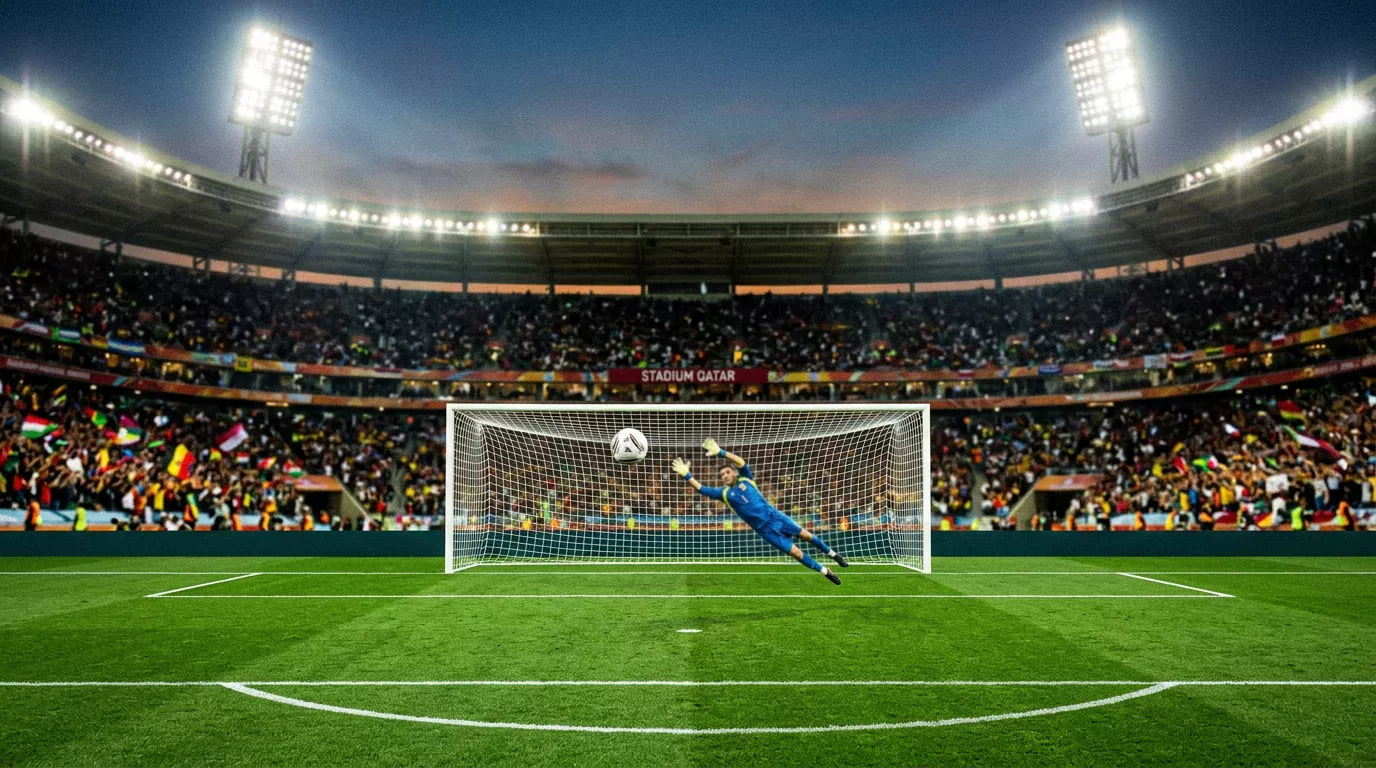
A colleague once asked me why I placed seven different wagers on a single World Cup match. His confusion stemmed from the assumption that betting means picking a winner — end of story. That assumption explains why most casual bettors leave value on the table during major tournaments. The 2026 FIFA World Cup offers more than a hundred markets per match across regulated Canadian sportsbooks, and understanding each world cup bet type transforms you from a passive spectator into someone who can engage with every minute of a 104-match tournament on your own terms.
I have spent nine years dissecting international tournament markets, watching how betting options evolved from simple win-draw-win propositions to layered ecosystems of player props, live betting corridors, and cross-match parlays. The 48-team format arriving in 2026 creates even more permutations — 12 groups instead of 8, a Round of 32 that never existed before, and a knockout bracket with paths we have never charted. Each structural change births new betting angles. This guide walks through every wager type available to Canadian bettors, explains the mechanics behind each, and flags which formats suit which stages of the tournament.
Moneyline — Picking the Match Winner
During the 2022 World Cup, I watched Argentina open at 1.50 against Saudi Arabia. The implied probability suggested Argentina had a 66.7% chance of winning. Then Saudi Arabia scored twice and held on, paying 15.00 to anyone who ignored consensus. That match encapsulates why moneyline betting remains the purest test of tournament judgment — no point spreads cushioning your read, no totals abstracting the contest. You predict a winner, and either the scoreboard validates you or it does not.
The moneyline represents the simplest world cup bet type: select which team wins the match. In soccer, this comes with a catch that trips up North American bettors accustomed to basketball or hockey — the draw counts as a separate outcome. A standard moneyline market displays three options: Team A to win, Team B to win, or the draw. Your wager loses if any outcome other than your selection occurs. Placing CAD 100 on Canada at 2.25 against Bosnia and Herzegovina returns CAD 225 if Canada wins, but you lose that stake if the match ends level or Bosnia prevails.
Decimal odds dominate Canadian sportsbooks, and converting them to implied probability helps evaluate whether a price offers value. Divide 1 by the decimal odds, then multiply by 100. Brazil at 1.40 implies a 71.4% win probability (1 / 1.40 = 0.714). If your analysis suggests Brazil wins 78% of similar matches, the 1.40 price undervalues them — you have found an edge. If your model shows 65%, the sportsbook price overestimates Brazil, and you should either pass or consider the opposing moneyline.
Group-stage moneylines behave differently than knockout-round moneylines because elimination pressure warps incentive structures. A team needing a point to advance may play conservatively, inflating draw probability beyond what historical data suggests. A team already eliminated may lack motivation, softening their moneyline value even at attractive prices. Timing matters too — odds shift as team news emerges, so comparing opening lines to pre-kickoff prices reveals where sharp money landed. I track these movements for every fixture because they often tell me more than any statistical model.
Spread Betting and Asian Handicap
Spread betting entered soccer from American football, where point differentials define contests more than soccer’s typically low-scoring affairs. The first time I used a spread in a World Cup match, Germany was laying -2.5 against a minnow. They won 4-0, covering comfortably. The spread transformed a predictable result into something with actual risk-reward texture. Without handicaps, heavy favourites price so low that returns barely justify the bankroll exposure.
A spread — sometimes called a handicap — assigns a theoretical goal advantage or disadvantage to each team before kickoff. If Switzerland enters at -1.5 against Qatar, Switzerland must win by two or more goals for spread bets on them to cash. Qatar at +1.5 covers if they win, draw, or lose by a single goal. This mechanism narrows the gap between mismatched opponents and creates more palatable odds for favourites that would otherwise price at 1.15 or lower.
Asian handicaps refine this concept by eliminating the draw outcome entirely through quarter-goal increments. A -0.75 Asian handicap splits your stake: half on -0.5 and half on -1.0. If your team wins by exactly one goal, you win half the wager and push on the other half. These fractional lines reduce volatility compared to standard spreads, which can be appealing when you want exposure to a heavy favourite without accepting the full variance of a -1.5 line.
World Cup knockout rounds complicate spread betting because matches can end level after 90 minutes, then resolve in extra time or penalties. Most spread markets settle on regulation time only, meaning a draw after 90 minutes voids normal spread wagers or treats the draw as the result. Always confirm settlement rules before placing knockout-round spreads — I learned this the hard way during a 2018 match that went to penalties after I assumed my -1.5 covered the entire contest.
Over/Under and Totals
The under 2.5 goals market is the unsung workhorse of tournament betting. During Qatar 2022, 38 of 64 matches finished with fewer than three goals — a 59.4% hit rate for under bettors. I remember sitting through scoreless first halves, my under tickets alive, watching two teams content to grind out a result. Totals betting strips away team allegiance and asks a simpler question: will this match produce offense or will it suffocate in defensive chess?
Totals markets set a line — 2.5 goals is the standard — and you bet whether the combined score finishes over or under that threshold. A match ending 2-1 clears the over; a match ending 1-1 falls under. Sportsbooks offer alternative lines at different prices: over 1.5 goals typically prices around 1.20 because shutouts remain rare, while over 3.5 sits near 2.40 or higher since four-goal matches occur in roughly a quarter of fixtures.
Group-stage totals follow patterns. Matchday 1 games between unfamiliar opponents often stay cagier than expected — teams feel each other out, making under 2.5 a reasonable default. By Matchday 3, desperation or dead-rubber dynamics swing totals higher: teams needing goals to advance push forward recklessly, while eliminated squads sometimes capitulate. The 2026 format introduces Matchday 3 scenarios where third-place finishers can advance, reducing blow-out potential compared to previous tournaments where only two teams per group qualified.
Knockout rounds typically see tighter scorelines than group stages. Extra-time possibilities also complicate totals: most markets settle on 90 minutes plus stoppage time, excluding extra time and penalties. Verifying whether your sportsbook includes extra time in totals avoids the frustration of watching a late extra-time goal convert a loser into a winner — or vice versa — because you misread the rules.
Prop Bets — Player and Match Specials
I once cashed a prop bet on a goalkeeper receiving a yellow card. It seemed absurd when I placed it — goalkeepers rarely get booked — but I knew this particular keeper had a history of time-wasting warnings. Sure enough, minute 86, he held the ball too long, the referee flashed yellow, and an 8.00 prop printed. That moment crystallized why props reward attention to granular details that broader markets ignore.
Prop bets — short for proposition bets — isolate specific events within a match rather than the final score. Player props dominate: will Kylian Mbappé score anytime? Will Alphonso Davies record an assist? How many shots on target will Harry Kane take? Match props expand beyond players: will there be a penalty awarded? How many corners will occur? Will both teams score? Each prop carries its own odds based on historical rates and matchup-specific factors.
Anytime scorer props attract the most World Cup action. A striker at 1.80 to score anytime needs to score roughly once every 1.8 matches for the price to represent fair value. Comparing that to his actual tournament scoring rate — and adjusting for the quality of opponents he faces — reveals whether the price offers edge. Defenders and midfielders often carry longer odds, so identifying players who take set pieces or drift into the box creates value in overlooked markets.
Booking props target cards. Teams known for aggressive fouling generate shorter prices on over 3.5 total cards, while disciplined sides push unders. Player cards work similarly: a defensive midfielder who consistently racks up cautions becomes a target. Weather props, first-event props (first throw-in, first corner, first goal kick), and manager-specific props (will a coach receive a card?) expand options even further. The depth of prop markets at major tournaments dwarfs regular club season offerings.
Parlays — Combining Multiple Picks
Parlays seduce because the math promises exponential returns. Combine three 2.00 picks into a parlay and the payout reaches 8.00 — your stake multiplied by each individual price. I have built parlays that paid over 20x my stake. I have also built parlays that died on the first leg when a late equaliser crushed what seemed like a certain win. That volatility defines the parlay experience, and the tournament environment amplifies both the highs and the lows.
A parlay links two or more independent wagers into a single ticket. Every leg must win for the parlay to pay. If one leg loses, the entire bet loses. Sportsbooks calculate parlay odds by multiplying the decimal odds of each selection: a two-leg parlay with one pick at 1.90 and another at 2.10 pays 1.90 x 2.10 = 3.99. That consolidated price exceeds what you would receive betting each leg separately, but it requires both to hit.
Correlation rules restrict certain parlay combinations. You typically cannot parlay a team’s moneyline with under 0.5 goals in the same match because those outcomes overlap — a 0-0 draw would invalidate the moneyline leg while cashing the under. Same-game parlays (SGPs) bundle correlated events into a single match wager with adjusted odds, allowing combinations like “Brazil to win and both teams to score” at a price reflecting the intersection probability.
Tournament parlays spanning multiple matches tempt bettors but carry brutal variance. A five-leg parlay at combined odds of 10.00 requires every pick to hit, and a single upset — which World Cups deliver regularly — zeros the ticket. I approach parlays as entertainment allocations rather than serious bankroll deployment. Limiting parlays to two or three legs preserves some return likelihood while still capturing the thrill of chasing multiplied payoffs.
Futures and Outrights
Before the 2022 World Cup, Argentina sat around 6.50 to win the tournament. After their opening loss to Saudi Arabia, books pushed them out to 11.00 in some markets. Bettors who bought that dip watched Messi lift the trophy. Futures reward patience, conviction, and the willingness to lock capital into positions that may not resolve for weeks. In a 39-day tournament, that patience gets tested constantly as each matchday reshapes the picture.
Futures markets price long-term outcomes before they resolve — typically outright tournament winner, group winner, top scorer, and reaching specific stages. Outright winner odds for the 2026 World Cup currently show France, Brazil, and Argentina clustered near the front with prices between 5.00 and 7.00. Host nations Canada and USA carry longer odds but benefit from home-field dynamics that sharpen their value relative to neutral-venue assessments.
Group winner futures bet on which team finishes atop their group. Canada’s Group B offers clear stratification: Switzerland prices shortest, Canada sits second, Qatar and Bosnia and Herzegovina round out the field. Group winner payouts often exceed expected value because sportsbooks pad margins on these lower-liquidity markets. Comparing prices across multiple operators identifies arbitrage opportunities or simply finds the best number.
Top scorer (Golden Boot) futures target the player who nets the most goals. Historical winners often come from teams that reach deep knockout rounds, accumulating matches. Forward positions dominate, but attacking midfielders with penalty-taking duties occasionally contend. Placing futures early locks in prices before tournament performance shifts lines, though mid-tournament adds after injuries or form changes can also offer value.
Live Betting — In-Play Markets
The ball crossed the goal line in the 73rd minute, and before I could celebrate, the odds feed refreshed, wiping the pre-goal prices and replacing them with a new reality. Live betting — also called in-play betting — compresses decision-making into seconds. I find it exhilarating and dangerous in equal measure. Exhilarating because you react to what you see rather than what you predict; dangerous because emotional swings and rapid price movements can shred discipline.
Live betting opens once a match kicks off and continues until the final whistle (or through extra time in knockout rounds). Sportsbooks update odds continuously based on match events: a goal shifts moneylines dramatically, a red card warps the market, a missed penalty barely registers. You can bet moneyline, next goalscorer, next team to score, match totals, and dozens of props during play. The range narrows slightly compared to pre-match offerings but remains extensive.
Latency separates professional in-play bettors from recreational ones. Sportsbooks operate with feeds several seconds behind actual play, creating windows where sharp bettors with faster video or stadium access exploit delays. Most Canadian bettors watching standard broadcasts cannot win that race. Instead, I use live betting to hedge pre-match positions, to add to plays I like after confirming my read, or to salvage value when pre-match tickets look doomed but not dead.
Tournament environments intensify live-betting swings. VAR reviews pause the action and spike volatility as unclear decisions loom. Injury substitutions shift team dynamics mid-match. The expanded bench rules (five substitutions, potentially six in extra time) mean lineups transform over 90-plus minutes. Each change creates live-betting angles — a fresh attacker entering late against tired defenders, for instance, can push anytime scorer props into favourable territory.
Bet Types at a Glance — Comparison Table
Navigating between all these bet types during a hectic tournament schedule requires knowing when to deploy each option. I keep a mental checklist before every match — which markets suit this fixture’s profile, which carry the sharpest lines, and which I should avoid given the context. The table below synthesizes the key traits of each major bet type so you can reference it before building your World Cup wagering approach.
| Bet Type | Outcomes | Best Stage | Variance | Skill Ceiling |
|---|---|---|---|---|
| Moneyline | Win / Draw / Win | All stages | Medium | High |
| Spread / Handicap | Team covers or fails | Group stage mismatches | Medium | Medium |
| Over/Under | Goals above or below line | All stages | Low-Medium | Medium |
| Player Props | Specific player events | All stages | High | High |
| Match Props | Specific match events | All stages | High | Medium |
| Parlays | Multiple legs combined | Group stage clusters | Very High | Low-Medium |
| Futures | Long-term outcomes | Pre-tournament / mid-tournament | Very High | High |
| Live Betting | Dynamic in-match markets | All stages | Very High | Very High |
Variance measures how wildly results swing around expected value — high variance markets produce more extreme short-term outcomes. Skill ceiling refers to how much edge an informed bettor can capture compared to a casual bettor. Futures and live betting reward expertise heavily, while parlays rely more on luck regardless of knowledge level. Matching your temperament to the right variance profile keeps tournament betting sustainable over 39 days and 104 matches.
Your betting portfolio should probably include several of these world cup bet types rather than concentrating on one. Moneylines and totals anchor most serious approaches, providing steady action without excessive variance. Props and parlays add entertainment value with controlled stakes. Futures give you a rooting interest across the entire tournament. Live betting fills the gaps when pre-match positions need adjustment. Combining all of them strategically — rather than randomly — distinguishes recreational fun from systematic engagement with the 2026 World Cup betting landscape.
