
World Cup 2026 Betting
England at the 2026 World Cup — Group L Preview, Odds & Squad
 Available in US
Loading...
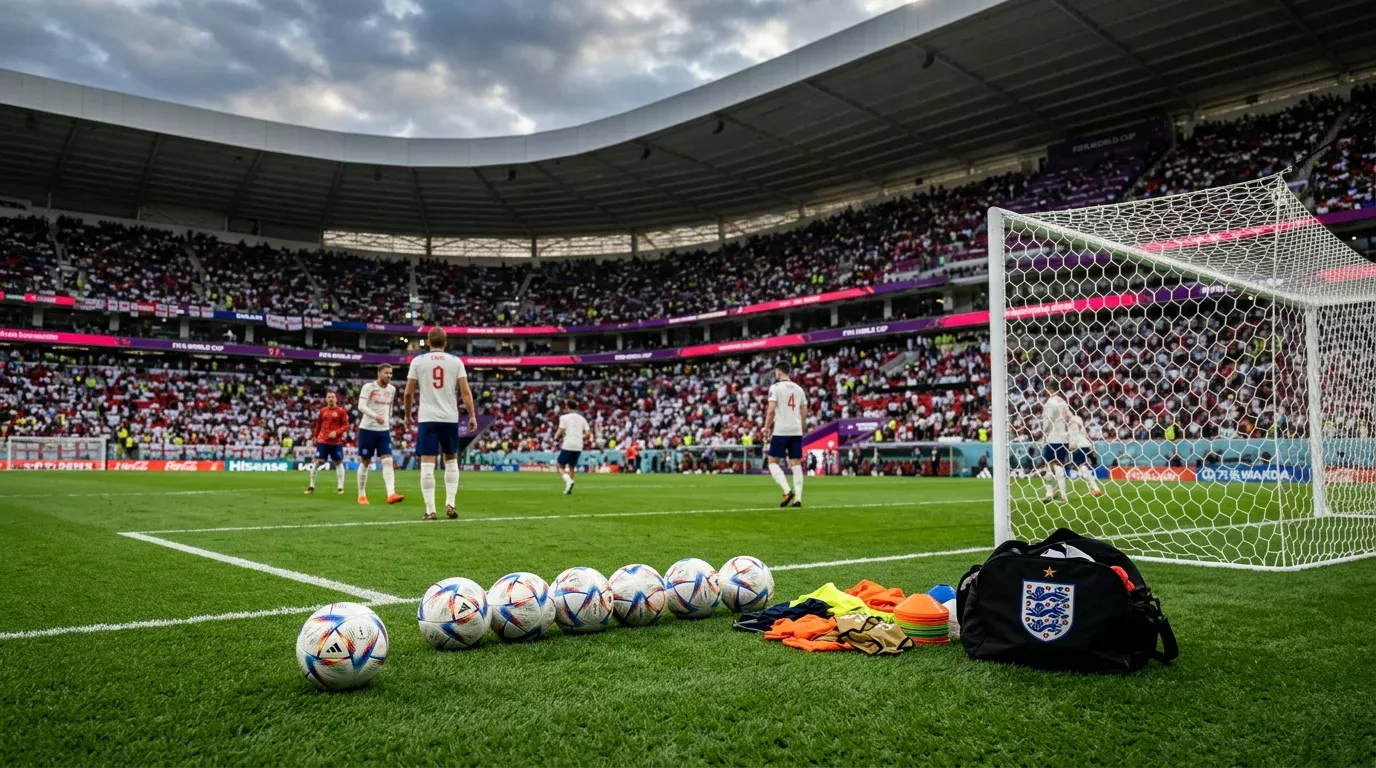
Sixty years of hurt continues to define English football’s relationship with the World Cup. I watched the Euro 2024 final alongside English supporters who had convinced themselves that this time would be different — the squad depth, the tactical evolution under Southgate, the generational talent that surely had to produce a major trophy eventually. Then came the familiar disappointment, the penalty shootout ghosts, the quiet acceptance that perhaps excellence without silverware represents England’s permanent condition. Now the Three Lions approach 2026 with a new manager, evolved tactical identity, and Group L opponents who will test their credentials before the knockout rounds even begin.
Group L places England alongside Croatia, Ghana, and Panama — a draw that combines 2018 World Cup final opponents with African pace and CONCACAF physicality. This group will not produce comfortable advancement through superior talent alone. Croatia’s tactical sophistication, Ghana’s athleticism, and Panama’s defensive organization each present specific challenges that England must navigate while building momentum for knockout rounds. For Canadian bettors analyzing World Cup 2026 team profiles, England represents the uncomfortable combination of elite talent and tournament underperformance that creates complex betting decisions.
UEFA Qualification Summary
England qualified through UEFA with the efficiency their talent level demands. The group stage produced maximum points against opponents who could not match English quality player-for-player, while more competitive fixtures revealed both strengths and vulnerabilities that persist into the World Cup. The qualification campaign also marked managerial transition, with new tactical approaches being integrated while maintaining the organizational foundation Southgate established.
The squad depth became apparent across qualification matches. Rotation between fixtures preserved key players while testing alternatives who may prove crucial during tournament knockout stages. Injuries to primary starters did not derail qualification momentum, suggesting the emergency options can perform at international level when required. This depth represents England’s primary advantage over all but two or three other World Cup participants.
Away fixtures tested England’s composure in hostile environments. The team secured results in settings designed to disrupt through crowd pressure and physical challenge, demonstrating mental resilience that previous English generations sometimes lacked. Whether this resilience extends to knockout pressure remains the question that no qualification campaign can answer — only elimination matches reveal true tournament character.
Tactical evolution continued throughout qualification as the new coaching staff refined their approach. The shift toward more possession-dominant football represented a philosophical change from Southgate’s pragmatism, though defensive organization remained a priority given the personnel available. By qualification’s conclusion, the tactical identity had clarified sufficiently for tournament preparation, though integration continues through pre-tournament camps.
Group L — Croatia, Ghana and Panama
The Group L draw produced immediate recognition: this group lacks easy matches. Croatia reached the 2018 World Cup final and the 2022 semifinals, demonstrating tournament pedigree that demands respect regardless of squad aging. Ghana’s African pace and pressing intensity creates physical challenges that technical superiority alone cannot resolve. Panama provides defensive organization and set-piece threat that tournament minnows sometimes leverage into shocking results.
Croatia represents the primary group stage threat. Luka Modrić’s age creates questions about his 2026 role, but Croatian midfield depth has developed beyond single-player dependency. Mateo Kovačić and other Premier League veterans provide English opponents with familiar challenges, while younger Croatian talents have emerged to supplement the 2018 core. The tactical battle between English possession ambitions and Croatian midfield control will determine Group L’s outcome more than any other fixture. Croatia’s tournament experience — two of the last three World Cup finals reached with inferior squad depth — suggests their pedigree compensates for individual talent disadvantages.
Ghana enters with the pace and physicality that European preparation struggles to replicate. Their pressing intensity can disrupt possession-oriented teams, forcing turnovers in dangerous areas that quick attackers exploit. Thomas Partey’s Arsenal experience provides midfield quality that anchors otherwise unpredictable collective organization. England must manage the physical battle while maintaining tactical discipline — allowing Ghana to dictate tempo would create unnecessary complications. The African approach differs fundamentally from European tactical patterns, requiring specific preparation that England’s schedule must accommodate.
Panama qualified through CONCACAF with performances that emphasized defensive structure over attacking ambition. Their approach will involve deep blocks, time-wasting, and set-piece opportunities that frustrate technically superior opponents. England has historically struggled against such tactics, lacking the patience and creativity to unlock organized defenses consistently. This match presents banana-skin potential if England approaches without appropriate intensity. The physical nature of CONCACAF football means Panama will challenge English players physically regardless of technical disadvantage.
My projection: England wins the group with 7 points after drawing with Croatia and defeating Ghana and Panama. Croatia finishes second with 5-6 points, Ghana claims third with a victory over Panama, and Panama exits without points. The scenario sets England up for a Round of 32 match against a third-place finisher from Group I or Group K — potentially Senegal, Iraq, Uzbekistan, or DR Congo.
Key Players and Generation Assessment
Jude Bellingham has emerged as England’s most decisive player, his Real Madrid performances establishing him among the world’s elite midfielders before his 23rd birthday. Bellingham combines technical quality with physical presence, box-to-box dynamism with positional intelligence, leadership presence with youthful energy. His form across the tournament will largely determine England’s ceiling — when Bellingham dominates, England can compete with any opponent.
The attacking depth surrounding Bellingham exceeds most international competition. Phil Foden’s Manchester City intelligence provides creative solutions that unlock organized defenses. Bukayo Saka’s direct running and crossing from the right wing creates attacking width. Harry Kane continues scoring at extraordinary rates despite aging concerns, his movement and finishing remaining elite-level. Cole Palmer’s emergence adds another creative dimension that opponents must account for tactically.
Midfield options beyond Bellingham include Declan Rice’s defensive screening, Kobbie Mainoo’s emerging talent, and various Chelsea and Manchester United contributors whose international roles continue evolving. The depth allows tactical flexibility — England can field double pivots for defensive solidity or single pivots for attacking emphasis depending on opponent analysis.
Defensive questions persist despite individual quality. The center-back position has rotated without establishing commanding partnerships that defined previous English generations. John Stones provides technical quality from deep positions but occasional lapses create chances for alert opponents. The fullback positions feature attacking specialists whose defensive discipline varies based on opponent quality. Overall defensive organization has improved under new management, though concentration lapses remain a vulnerability.
Jordan Pickford continues as starting goalkeeper with the experience and distribution that modern systems require. His penalty shootout heroics provide psychological advantage in elimination scenarios, though his claim on crosses and positional decisions occasionally create unnecessary anxiety. Backup options have developed without threatening his position, ensuring continuity through the tournament.
The generational assessment suggests England possesses the individual talent to win the World Cup while lacking the collective identity that champions typically display. The squad might be the deepest in tournament history, yet depth without direction produces inconsistent performances. The new managerial appointment aimed to provide that direction — whether it has succeeded will be tested across Group L and beyond.
Injury management across the season will affect England’s tournament readiness. Premier League intensity creates fitness concerns that other nations’ players do not face at the same level. The coaching staff must balance player welfare against match preparation, potentially resting key players in pre-tournament friendlies to ensure peak condition for the World Cup itself. Historical precedent suggests English players often arrive at tournaments fatigued from demanding domestic seasons.
The pathway through the bracket could favor or challenge England depending on group stage results across the tournament. Winning Group L positions England against likely weaker Round of 32 opponents, while finishing second could create earlier collisions with Brazil or Argentina that the bracket structure might otherwise avoid. These positioning considerations add strategic importance to the Croatia fixture beyond simple point accumulation.
Tactical Approach
The post-Southgate era has brought tactical evolution toward more possession-dominant football. Where Southgate prioritized defensive structure and transition speed, the current approach emphasizes sustained possession and positional play that controls matches through ball retention. This shift requires different player profiles and coordination patterns that qualification began establishing but tournament pressure will truly test.
The base formation varies between 4-3-3 and 4-2-3-1 depending on opponent structure. Bellingham’s positioning defines the system — as a number eight he provides box-to-box contribution, as a number ten he focuses on creation and finishing. Kane drops deep to link play, creating space for runners from midfield and wide positions. The fluidity creates numerical advantages across the pitch but requires coordinated movement that breaks down under pressure.
Pressing intensity has increased compared to Southgate’s conservative blocks. The front line engages opponents in their defensive third, forcing rushed clearances and transition opportunities. Midfield support maintains this pressure through coordinated movements that eliminate passing lanes. When the press succeeds, England creates chances in dangerous areas. When opponents play through pressure, defensive transitions become vulnerable.
Set pieces remain an English strength given the aerial quality available. Kane’s heading ability, Stones’ movement, and various other aerial threats produce reliable scoring opportunities from corners and free kicks. Defensive set piece organization has been addressed after previous tournament vulnerabilities, though the height disadvantage against certain opponents persists.
The transition game provides England’s most dangerous attacking moments. Bellingham’s driving runs from midfield, combined with Saka and Foden’s movement into channels, creates overloads that organized defenses struggle to contain. When England wins possession in central areas, the speed of their attacking transition rivals any international team. Opponents who commit numbers forward risk being caught by counter-attacks that English pace exploits ruthlessly.
Defensive organization has evolved to accommodate more ambitious attacking intentions. The back four now plays higher lines that support pressing but create space behind for opponents to exploit. Rice’s screening protects the central areas, allowing fullbacks to advance without exposing the defensive line entirely. This balance remains imperfect — certain opponents will identify the space behind English defensive lines and target it specifically.
Width plays crucial roles in the tactical structure. Saka and Foden occupy touchlines when possession settles, stretching opposing defenses horizontally before combinations unlock vertical passing lanes. This width creates one-on-one situations that English wingers generally win, producing crosses and cutbacks that the central attackers finish. Against teams that defend narrow, England’s width becomes particularly valuable.
England’s World Cup Record — The Weight of 1966
Every English World Cup campaign carries the weight of 1966 — the lone triumph that becomes more distant with each passing tournament. Bobby Moore lifting the trophy at Wembley represents both inspiration and burden, proof that England can win while highlighting how rarely they have come close since. The intervening decades produced semifinal appearances in 1990, 2018, and occasionally competitive quarterfinal exits, but never the final step that would end sixty years of waiting.
The 2018 run to the semifinals in Russia provided hope that the current generation could achieve what predecessors failed to deliver. Young squad, manageable bracket, penalties finally conquered against Colombia — the narrative suggested breakthrough potential. Then Croatia’s extra-time winner crushed those hopes, establishing a pattern of near-misses that continued through Euro 2020’s final penalty defeat to Italy and Euro 2024’s narrow final loss to Spain.
Historical patterns inform tournament assessment. England performs adequately in group stages, typically advancing without serious concern. The knockout rounds produce inconsistent results — sometimes comfortable advancement, sometimes shocking early exits, occasionally heartbreaking near-misses at the final hurdles. Predicting which version appears in 2026 requires accepting that England’s tournament performances carry variance that individual match analysis cannot fully capture.
The psychological dimension weighs heavily on English tournament football. Players who perform brilliantly in Premier League pressure situations sometimes struggle when representing their country in elimination matches. Whether this reflects media pressure, expectation management, or deeper psychological patterns remains debated among analysts. The current generation has experienced enough tournament disappointment that either resilience or resignation might characterize their 2026 mentality.
North American venues provide England with potentially favorable conditions. The significant British diaspora in American and Canadian cities will create crowd support that approximates partial home advantage at certain stadiums. The time zone differences mean English supporters can watch matches without the late-night scheduling that European tournaments sometimes require. These structural factors neither guarantee success nor prevent failure, but they remove some obstacles that other host locations might present.
Betting Odds — Outright and Group Markets
England’s outright odds between 8.00 and 12.00 position them below the Argentina-Brazil-France tier but among the next group of realistic contenders. The pricing reflects squad depth and talent quality while accounting for tournament underperformance that has characterized recent cycles. Whether these odds offer value depends on your assessment of managerial impact and tactical evolution since previous disappointments.
Group L winner odds around 1.70-1.90 reflect the competitive nature of the group. Croatia’s pedigree and Ghana’s unpredictability create genuine uncertainty about group positioning that easier draws would not present. These prices offer potential value if you believe England’s quality advantage outweighs the tactical challenges opponents present — the market may be overweighting recent English struggles against organized opposition.
Player markets provide interesting opportunities given England’s attacking depth. Kane’s Golden Boot odds around 12.00-15.00 reflect his proven tournament scoring, though his age raises questions about minute management across knockout rounds. Bellingham’s emergence creates alternative attacking threats at longer odds. Saka and Foden’s scoring potential from wide positions adds value plays for bettors who believe England will create numerous chances.
Tournament specials around England making the final trade around 4.50-5.50, reflecting the historical pattern of semifinal advancement without final conversion. If you believe the new management has addressed the psychological barriers that prevented previous breakthroughs, these prices may offer value. The semifinal advancement market around 2.50-3.00 appears fairly priced given England’s talent level and potential knockout bracket positioning.
Match-specific betting opportunities will emerge as the tournament approaches. The England-Croatia fixture will attract significant market attention given their 2018 history, with both teams likely starting as genuine contenders. Ghana represents potential value as underdogs if the market underestimates African physicality and pressing intensity. Panama markets will feature extreme pricing that reflects the quality gap without offering realistic value on either side.
Realistic Ceiling
England’s talent level supports quarterfinal or semifinal advancement as baseline expectations. The squad quality matches any tournament competitor, with depth that exceeds most. Whether this translates to actual results depends on factors that analysis cannot fully predict: managerial decisions under pressure, individual performances in decisive moments, and the psychological weight of English tournament history.
The ceiling involves World Cup victory — this squad possesses the individual talent to beat any opponent across 90 or 120 minutes. The question is whether collective organization and mental resilience match individual ability. Previous generations demonstrated that talent alone does not guarantee trophies, and the current squad has not yet proven they differ from those precedents.
My projection: England advances from Group L, likely as winners, and defeats their Round of 32 opponent comfortably. The quarterfinals represent the historical barrier where English campaigns often conclude. Advancement probability to semifinals sits around 35%, with final appearance near 18% and tournament victory around 8-10%. These numbers suggest the market pricing is approximately fair, without significant value in either direction.
The floor scenario involves group stage elimination or Round of 32 exit — outcomes that would represent significant underperformance given squad quality. Croatia possesses the tactical sophistication to defeat England in a direct encounter, and Ghana’s physicality could overwhelm if England approaches without appropriate intensity. These scenarios seem unlikely given talent advantages but remain possible in tournament football where single matches determine fates.
For Canadian bettors evaluating England positions, the key consideration involves risk tolerance. England offers higher potential returns than Argentina or France if you believe this generation can finally convert talent into trophies. The downside involves familiar disappointment if tournament patterns persist. Position sizing should reflect this variance — England represents speculation on breakthrough rather than foundation holdings based on consistent excellence.
The tournament structure creates specific opportunities for England if they navigate Group L successfully. The bracket positioning could produce favorable matchups through the quarterfinals before elite opposition becomes unavoidable. Identifying these structural advantages requires monitoring results across all groups, then adjusting knockout round positions based on actual rather than projected matchups. Live betting opportunities will emerge as the bracket clarifies.
