World Cup 2026 Betting
Japan at the 2026 World Cup — Group F Profile & Betting Odds
 Available in US
Loading...
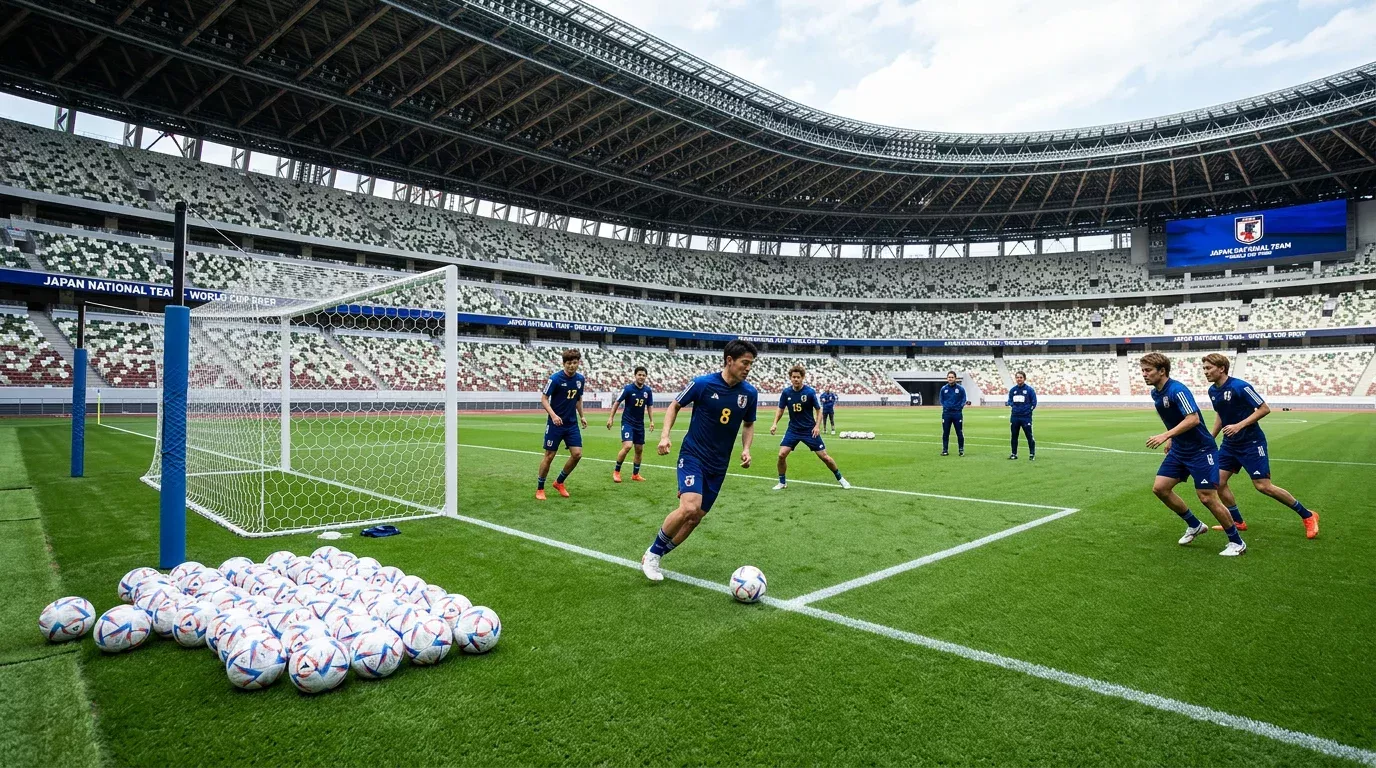
The Samurai Blue arrived in Qatar as underdogs and departed as giant-killers. I remember the 2022 group stage with clarity — Japan defeating Germany 2-1, then topping the group with victory over Spain, before the cruel penalty shootout exit against Croatia in the Round of 16. Those results announced Japan’s arrival as genuine World Cup contenders rather than plucky Asian representatives content with group stage participation. The 2026 tournament arrives with elevated expectations: advancement from the group stage represents baseline, knockout round progression the realistic target.
Group F pairs Japan with the Netherlands, Sweden, and Tunisia — opponents whose varying styles will test the tactical sophistication that European club development has provided Japanese players. The Netherlands represents the primary challenge, their individual quality and tournament pedigree exceeding even Germany and Spain’s struggling 2022 versions. For bettors evaluating World Cup 2026 odds markets, Japan offers the intriguing combination of 2022 momentum, European-based talent, and dark horse positioning that creates attractive value opportunities.
AFC Qualification
Japanese qualification through AFC’s demanding process demonstrated the consistency their talent level enables. The regional competition — including Australia, Saudi Arabia, and emerging Asian powers — provided preparation for World Cup intensity while allowing tactical refinement. By qualification’s end, the squad identity had clarified around high-pressing football with quick transitions that European club development has refined.
Away fixtures across Asian venues tested Japanese composure in challenging environments. Results came through technical superiority and tactical discipline that opponents could not match consistently. The depth revealed through squad rotation exceeds Asian competitors, with backup options at every position capable of maintaining quality when primary starters require rest.
The European player pathway has transformed Japanese football. Where previous generations included domestic-league players with limited international exposure, the current squad features Bundesliga, Premier League, and Serie A contributors whose daily training environments match World Cup intensity. This developmental advantage creates quality that historical Japanese squads could not access regardless of tactical sophistication.
Group F — Netherlands, Sweden and Tunisia
Netherlands represents the ultimate group stage test. Dutch individual quality — van Dijk’s defending, de Jong’s midfield control, Gakpo’s attacking threat — exceeds the Germany and Spain teams that Japan defeated in 2022. However, Japanese pressing intensity and counter-attacking efficiency troubled those squads, and Dutch defensive concentration has proven inconsistent in previous tournaments. This fixture represents Group F’s defining encounter.
The Japan-Netherlands match will determine group positioning. Both teams should defeat Sweden and Tunisia, making their direct encounter the effective group final. Japanese pressing will test Dutch composure on the ball, while Dutch physical advantages should create aerial dominance that Japan must mitigate through positional discipline. The tactical battle promises the tournament’s most intriguing group stage clash.
Sweden qualified through UEFA with defensive organization that Scandinavian football reliably produces. Their structure and set piece threat create specific challenges that technically superior opponents must prepare for specifically. Japan’s pressing intensity should prevent Swedish rhythm from establishing, but defensive lapses against aerial threats require concentration that 90 minutes of pressure can compromise.
Tunisia brings CAF qualification pedigree and physical presence that Asian opponents rarely provide. Their defensive organization frustrated higher-ranked European opponents in previous World Cups. Japan should control this fixture through superior technique and pressing coordination, but complacency would invite complications that alert opponents exploit.
My projection: Japan finishes second with 6 points after splitting results with Netherlands and defeating Sweden and Tunisia, Netherlands claims first with 7-9 points, Sweden takes third through organized defensive performances, and Tunisia exits with 1-3 points.
European-Based Core and Key Figures
Takefusa Kubo has emerged as Japan’s most creative talent, his Real Sociedad performances demonstrating the technical quality and tactical intelligence that La Liga demands. Kubo operates between lines with movement that defenders struggle to track, his passing combinations and shooting accuracy creating chances that less gifted players cannot manufacture. His continued development suggests prime years will coincide with this tournament cycle.
Junya Ito provides direct running from wide positions, his Bundesliga experience refining the pace and dribbling that create one-on-one situations. Ito’s crossing accuracy and occasional goals from cutting inside add dimensions that purely technical wingers cannot offer. His work rate defending from the front contributes to Japanese pressing effectiveness.
Wataru Endo anchors the midfield with the positioning intelligence his Liverpool career demanded. His screening of the defense allows Japanese fullbacks to attack without exposing central areas, while his distribution initiates attacks from deep positions. Endo’s Premier League experience against elite attackers provides preparation for World Cup quality that Asian competition cannot replicate.
Kaoru Mitoma’s Brighton emergence provided explosive attacking options from the left wing. His acceleration and dribbling in tight spaces create numerical advantages that organized defenses struggle to contain. Mitoma’s finishing ability from cutting inside adds goal threat that previous Japanese wingers lacked consistency providing.
The goalkeeper position features European-experienced options whose quality matches continental standards. The defensive organization behind them has developed understanding that produces clean sheets against quality opposition when concentration maintains throughout matches.
Odds and Dark Horse Status
Japanese outright odds between 35.00 and 55.00 position them among genuine dark horse contenders. The pricing reflects 2022 breakthrough, European-based talent, and pressing intensity that troubled elite opponents. Value exists if you believe the 2022 results represented sustainable quality rather than tournament variance that mean-reverts against different opponents.
Group F positioning odds reflect Netherlands’ favorite status while acknowledging Japanese competitive credentials. These prices may undervalue Japanese quality if the market overweights historical European dominance that recent results have questioned. The Japan-Netherlands fixture creates genuine uncertainty that affects all Group F markets.
Player markets offer opportunities given Japanese attacking quality. Kubo’s creative involvement should produce goal contributions if Japan advances deep, where his technical quality creates value at longer odds. Mitoma’s directness creates longer-odds value for bettors who believe his best form materializes in tournament settings. Team attacking markets should reflect the efficiency Japanese finishing demonstrated in 2022.
Tournament specials around Japan reaching the quarterfinals trade around 3.50-4.50, reflecting genuine uncertainty about knockout credentials. These prices offer value if you believe 2022 represented baseline rather than ceiling performance. The cautious position acknowledges that penalty shootout exit against Croatia suggested composure under pressure remains the variable requiring improvement.
Match-specific opportunities will emerge around the Japan-Netherlands fixture. The market will likely favor Dutch quality, potentially undervaluing Japanese pressing intensity that troubled superior individual talents in 2022. Totals markets may offer value if expectations around Dutch possession dominance underestimate Japanese transition efficiency.
Japan at the World Cup
Japanese World Cup history demonstrates consistent advancement from group stages without knockout round breakthroughs. The 2002 co-host run reached Round of 16, as did 2010, 2018, and 2022 campaigns. The pattern — group stage competence followed by knockout elimination — creates the ceiling that the current generation aims to exceed.
The 2022 performances reset expectations entirely. Defeating Germany and Spain announced quality that previous Japanese generations had not demonstrated. The comeback victories — recovering from deficits against both European giants — revealed mental resilience that earlier Japanese teams sometimes lacked. Whether those results represented peak performance or baseline capability determines how 2026 projections should be calibrated.
The penalties against Croatia suggested composure under pressure remains the variable requiring improvement. Shootout losses represent variance that individual match analysis cannot fully account for, but the pattern of knockout round eliminations through penalties creates concern that extends beyond single-match misfortune. Penalty preparation has reportedly received specific attention since 2022.
The tactical evolution across Japanese football cycles reflects systematic development rather than cyclical fluctuation. Each generation has exceeded its predecessor’s tournament performances, suggesting structural improvements that should produce continued advancement. Whether this linear progression continues or plateaus at Round of 16 defines the uncertainty surrounding Japanese tournament projections.
Projection
Japan advances from Group F in my projection, likely as runners-up behind Netherlands after the critical head-to-head produces familiar European narrow victory. The Round of 32 provides opportunity to demonstrate knockout credentials that previous Japanese generations established inconsistently. Quarterfinal advancement sits around 30% probability, with deeper runs representing ceiling scenarios that genuine quality supports.
The floor scenario involves group stage elimination if the Netherlands fixture produces heavy defeat and Sweden’s defensive organization frustrates Japanese pressing. These outcomes seem unlikely given demonstrated quality but remain possible in tournament football where single matches determine fates regardless of aggregate capability.
Position sizing should reflect dark horse value — meaningful exposure at attractive odds without overcommitment that single-match variance might undermine. Japan represents the most intriguing Asian betting proposition since South Korea’s 2002 home tournament run. The European development pathway has produced squad quality that historical Asian competitors could not access.
For Canadian bettors evaluating Japan positions, the key consideration involves 2022 result interpretation. If those victories represented sustainable quality improvement, current odds significantly undervalue Japanese championship potential. If they represented favorable variance against struggling opponents, market pricing appropriately reflects realistic expectations. Balanced positions acknowledge both interpretations while favoring upside exposure that long odds provide.
