World Cup 2026 Betting
Mexico at the 2026 World Cup — Group A Preview & Betting Odds
 Available in US
Loading...
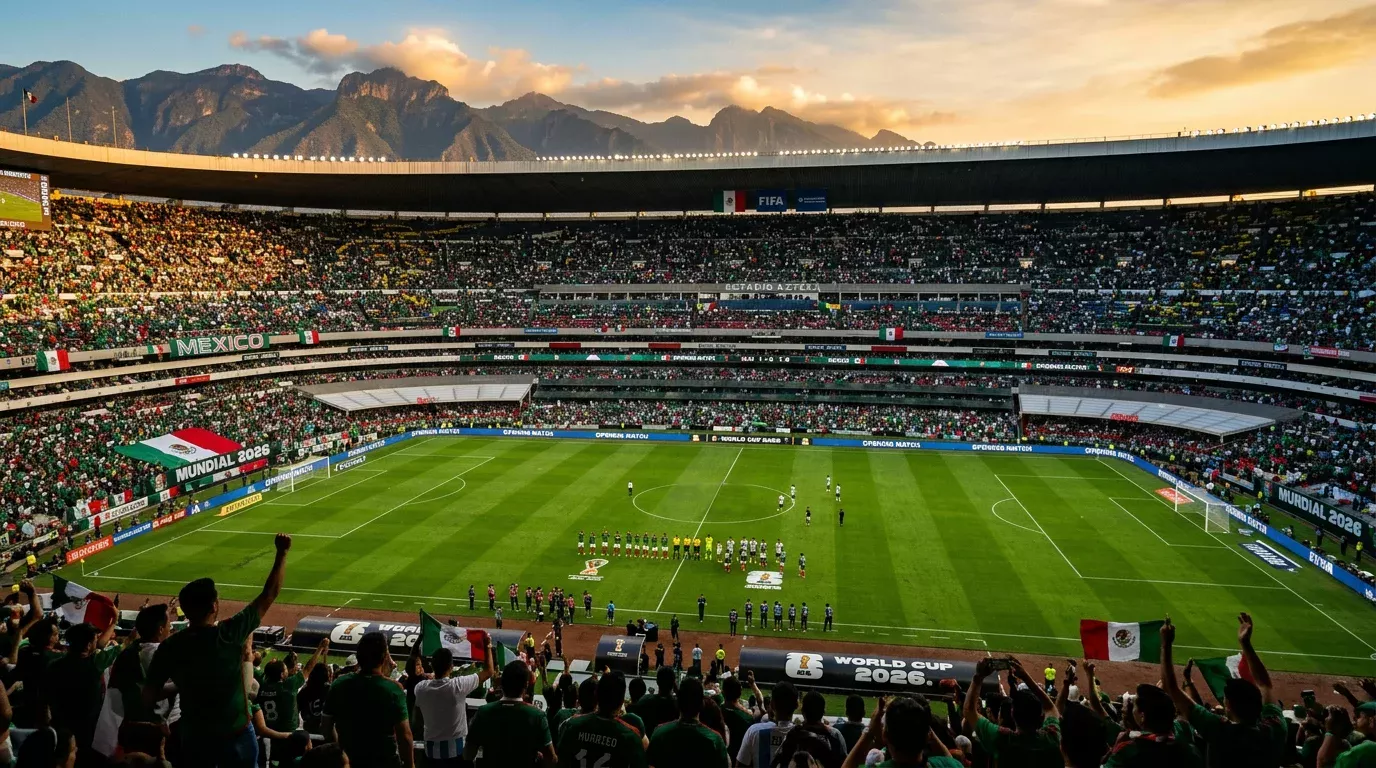
The tournament begins in Mexico City. On June 11, 2026, Estadio Azteca will host the opening match of the expanded 48-team World Cup, with Mexico facing South Africa in a fixture that honors both nations’ footballing heritage. I have watched El Tri navigate the complexities of CONCACAF qualification for decades, their consistent advancement to World Cups masking the persistent knockout round disappointment that defines modern Mexican football. Seven consecutive Round of 16 exits created the “quinto partido” narrative — the fifth match curse that Mexican supporters both mock and fear. This home tournament offers opportunity to rewrite that history in stadiums where passionate crowds might provide the edge that neutral venues have denied.
Group A pairs Mexico with South Korea, South Africa, and Czechia — opponents whose varying styles will test different aspects of Mexican preparation. South Korea’s technical quality and pressing intensity, South Africa’s physicality and opening-match significance, Czechia’s tactical discipline from UEFA qualification — each presents specific challenges that require focused preparation. For Canadian bettors analyzing all 48 qualified teams, Mexico represents familiar World Cup presence with the added dimension of co-host advantage that might finally break the Round of 16 barrier.
Co-Host Qualification and Opening Match
Automatic qualification as tournament co-host removed the CONCACAF qualification gauntlet that has occasionally provided dramatic moments in Mexican football history. The security of guaranteed participation allowed squad development and tactical experimentation that competitive qualification would have constrained. This freedom produced both benefits — broader player evaluation, tactical refinement — and concerns about competitive edge that meaningful matches develop.
The opening match responsibility carries unique significance for Mexican football. Estadio Azteca hosting the tournament’s first fixture places Mexico at the center of global attention from the opening whistle. The historic venue — site of the 1970 and 1986 World Cup finals — provides atmospheric advantage that opponents must overcome. South Africa’s opponent role in the opener creates specific tactical dynamics as both teams manage opening-match nerves and global spotlight pressure.
Mexican domestic league strength provided preparation opportunities unavailable to most co-hosts. Liga MX’s quality allows European-based players to compete against domestic talents during international windows, maintaining sharpness that purely preparation-focused camps cannot replicate. This domestic foundation — combined with European experience from players at top continental leagues — creates squad depth that tournament football’s physical demands require.
Group A — South Korea, South Africa and Czechia
South Korea represents the primary Group A challenge. The Korean national team has evolved from the 2002 co-host success through consistent Asian excellence that produces genuine World Cup contenders. Their pressing intensity and technical quality in midfield create challenges that CONCACAF opponents rarely present. The tactical sophistication Korean players develop through European club football — particularly in Bundesliga and Premier League — demands respect that historical Asian opponents perhaps did not warrant.
South Africa’s opening match significance extends beyond points accumulation. As the opponent Mexico faces first, their performance sets tournament tone regardless of objective quality assessment. South African football has developed through domestic investment and strategic diaspora inclusion, though the overall talent level remains below elite international competitors. Mexico should control this fixture through technical superiority, but opening matches produce unexpected results when favorites underestimate occasion pressure.
Czechia qualified through UEFA playoffs, demonstrating the quality required to survive European competition’s depth. Czech tactical discipline and set piece organization create specific challenges that technically superior opponents sometimes struggle against. Their defensive structure frustrates teams expecting comfortable possession dominance. Mexico must prepare for patient attacking approaches that unlock organized defenses rather than the direct transitions that open matches sometimes produce.
My projection: Mexico tops the group with 7-9 points, South Korea finishes second with 4-6 points after competitive performances, South Africa claims third with a victory over Czechia, and Czechia exits with 1-3 points. This outcome positions Mexico for a Round of 32 match against a third-place finisher from Group B or Group D — potentially Bosnia, Qatar, Australia, or Paraguay.
Key Players
Edson Álvarez anchors Mexican midfield with the organizational skills his Premier League development refined. His West Ham tenure produced a complete defensive midfielder whose positioning, tackling, and distribution provide the platform upon which Mexican attacking ambitions operate. Álvarez’s leadership extends beyond tactical contribution into the vocal direction that young squads require during pressure moments.
Santiago Giménez has emerged as Mexico’s most dangerous striker, his European development producing finishing quality that previous Mexican forwards sometimes lacked. His Feyenoord and subsequent transfers demonstrated the goal-scoring reliability that international football demands. Giménez’s movement creates chances that service from wide areas exploits, and his penalty box presence adds dimensions that build-up play alone cannot manufacture.
Hirving Lozano provides the direct running threat that Mexican attacks require. His Serie A and subsequent experience developed the tactical maturity that complements his pace and dribbling ability. Lozano operates from the left wing, cutting inside onto his stronger right foot or delivering crosses that central attackers attack. His World Cup experience — including memorable goals — provides psychological familiarity with tournament pressure.
The defensive organization relies on center-back partnerships whose European experience provides tactical sophistication. Various options have competed for selection without clear hierarchy emerging, though tournament proximity should clarify starting positions. The fullback contributions to attacking play — particularly from the right side — add dimensions that narrow formations cannot replicate.
Goalkeeping depth provides security that injury scenarios might require. Guillermo Ochoa’s veteran experience offers tournament familiarity, while younger options have developed through domestic and European pathways. The competition for starting position should produce optimal selection regardless of which goalkeeper claims the role.
Betting Odds and Markets
Mexican outright odds between 35.00 and 50.00 position them among dark horse contenders whose home advantage might elevate performance beyond historical patterns. The pricing reflects consistent World Cup qualification and co-host status while accounting for the Round of 16 barrier that seven consecutive tournaments have proven difficult to breach. Value exists if you believe home advantage plus squad quality produces breakthrough this cycle.
Group A winner odds around 2.00-2.50 reflect competitive composition despite Mexico’s co-host advantage. South Korea’s quality creates genuine uncertainty that easier draws would eliminate. These prices may offer value if Mexican home advantage translates clearly to group dominance that neutral venue performances have not consistently produced.
Player markets provide opportunities given Mexican attacking quality. Giménez’s goal involvement odds offer value if Mexico advances deep, where his finishing would accumulate points. Team total goals should exceed baseline given group opponent quality and home venue advantage, with over lines offering reasonable probability at typical pricing.
Mexico’s World Cup Track Record
Mexican World Cup history combines consistent qualification with persistent knockout disappointment. Seventeen World Cup appearances demonstrate the program’s sustained excellence across decades, but zero semifinal appearances since 1986 — when Mexico hosted — highlights the ceiling that recent generations have failed to breach. Seven consecutive Round of 16 exits created a psychological barrier that talented squads have struggled to overcome.
The 1986 home tournament remains Mexico’s best World Cup performance, reaching the quarterfinals where West Germany’s penalty shootout victory ended co-host ambitions. That tournament demonstrated how home advantage elevates Mexican performance — the energy of domestic crowds, familiar conditions, reduced travel demands — creating possibilities that neutral venues have not replicated since.
The 2026 opportunity parallels 1986’s home tournament context. Three host nations distribute matches across North America, but Mexican venues will provide the passionate atmosphere that El Tri requires to exceed historical limitations. Whether this generation can match or exceed 1986’s achievement depends on factors that analysis cannot fully predict — psychological readiness, individual performances in decisive moments, and the margins that separate Round of 16 exit from quarterfinal advancement.
Forecast
Mexico advances from Group A as winners in my projection, entering the knockout rounds with momentum from controlled group stage performances at home venues. The Round of 32 provides the test that will determine whether this generation differs from predecessors — the “quinto partido” scenario that has ended Mexican ambitions seven consecutive times.
Quarterfinal advancement probability sits around 30-35% in my projections. Home advantage and squad quality support breakthrough potential, while historical patterns suggest systemic issues that single tournaments cannot resolve. Semifinal appearance probability near 12-15% reflects upside scenarios rather than baseline expectations.
My specific projection: Mexico advances from Group A, defeats their Round of 32 opponent with home crowd advantage, then faces elite opposition in the Round of 16 where historical patterns suggest elimination despite competitive performance. Breaking this pattern would represent the generational achievement that Mexican football awaits.
