
World Cup 2026 Betting
All 16 World Cup 2026 Venues — Stadiums, Cities & Matches
 Available in US
Loading...
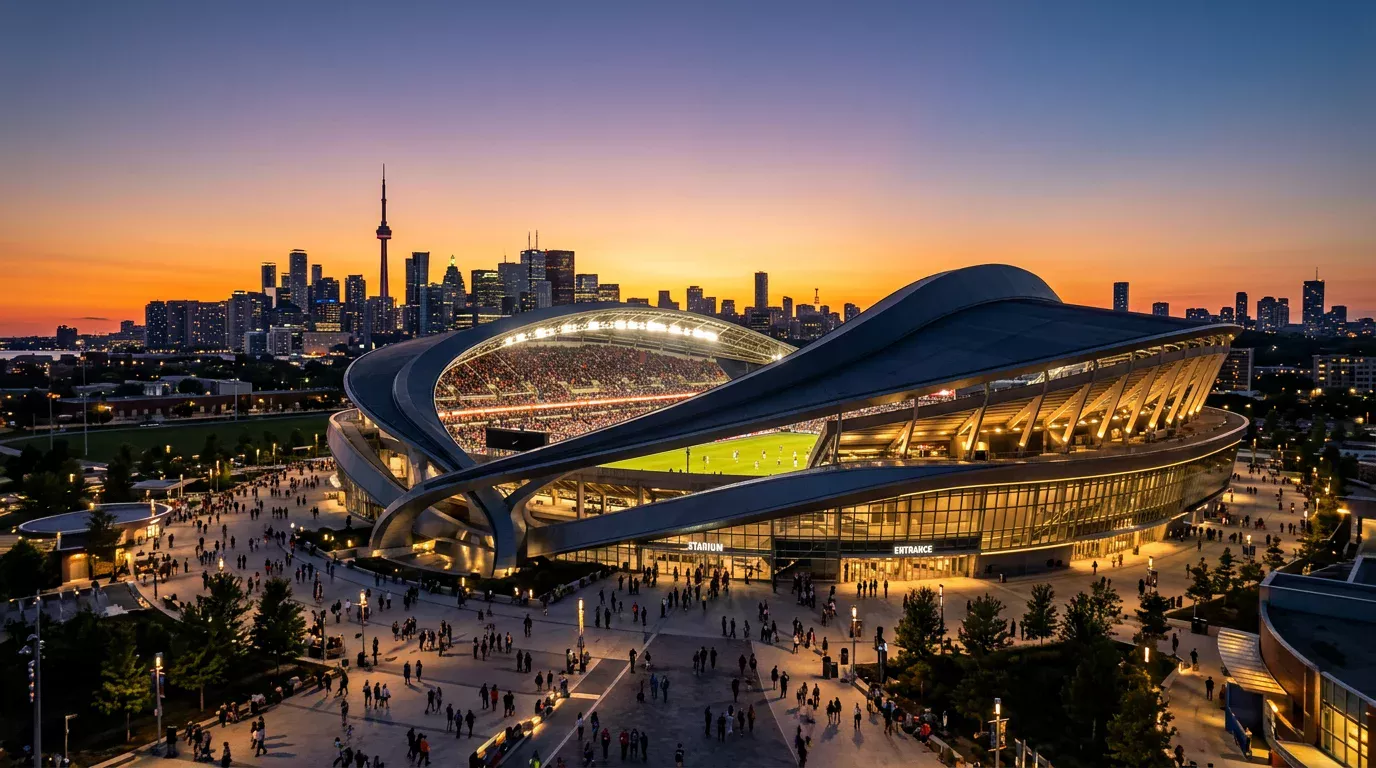
Sixteen stadiums across three countries — that sentence alone describes something unprecedented in World Cup history. I have attended matches at seven previous World Cup venues, and none of those tournaments attempted what 2026 undertakes: a transcontinental event spanning four time zones, eleven American cities, two Canadian hosts, and three Mexican grounds. The logistics dwarf anything FIFA has organized before. For bettors and fans, understanding these world cup 2026 venues shapes how you interpret home-field advantages, travel fatigue, crowd dynamics, and even weather conditions that influence match outcomes.
The venue distribution reflects both infrastructure capacity and political balance. The United States hosts 78 of 104 matches, including the semi-finals and final. Mexico holds the opening ceremony and 13 group-stage and knockout fixtures. Canada contributes two stadiums hosting 13 matches each, with particular significance for Canadian bettors following the home nation through Group B. This guide profiles every venue, examines the geographic spread, and flags the stadium characteristics that matter for tournament analysis.
Venue Map — Three Countries, 16 Stadiums
Looking at the venue map for the first time, I was struck by how thoroughly the tournament blankets North America. From Seattle in the Pacific Northwest to Miami in the Southeast, from Vancouver on Canada’s west coast to Boston in New England, the footprint covers over 4,000 kilometres east to west. Teams playing in this tournament will log more flight miles than any previous World Cup participants. That travel burden factors into performance analysis — a team flying coast to coast between group matches faces different recovery challenges than one staying regional.
The United States contributes eleven venues across nine states: MetLife Stadium (New Jersey), SoFi Stadium (California), Hard Rock Stadium (Florida), AT&T Stadium (Texas), NRG Stadium (Texas), Mercedes-Benz Stadium (Georgia), Lumen Field (Washington), Levi’s Stadium (California), Lincoln Financial Field (Pennsylvania), Gillette Stadium (Massachusetts), and GEHA Field at Arrowhead Stadium (Missouri). Texas alone hosts two venues — Dallas and Houston — creating a regional cluster that minimizes travel for teams assigned to both.
Mexico’s three venues concentrate in the country’s central and northern regions: Estadio Azteca in Mexico City, Estadio BBVA in Monterrey, and Estadio Akron in Guadalajara. The Azteca holds historical weight as the only stadium to host two World Cup finals (1970 and 1986). Its altitude — 2,240 metres above sea level — affects player conditioning and ball flight, a factor I track when analyzing matches scheduled for Mexico City.
Canada positions its two venues on opposite coasts: BMO Field in Toronto and BC Place in Vancouver. This split ensures Canadian fans in both the country’s population centre and its western hub can attend without transcontinental travel. For Canada’s national team, playing every group match at home — alternating between Toronto and Vancouver — creates a unique home-field dynamic that no other participant enjoys. The 4,400-kilometre distance between Canadian venues equals roughly a five-hour flight, which affects any team playing matches at both.
United States Venues — 11 Stadiums
MetLife Stadium anchors the tournament as the final venue. Located in East Rutherford, New Jersey — functionally New York City’s NFL home — it seats over 82,000 and will host the July 19 final plus semi-finals and earlier knockout rounds. I have been inside MetLife for NFL games; the atmosphere for a World Cup final will transcend anything that stadium has experienced. New York’s media market ensures global attention concentrates here for the tournament’s decisive moments.
SoFi Stadium in Inglewood, California, represents the tournament’s architectural showcase. Opened in 2020 as the NFL’s most expensive venue, its translucent roof and massive video board create a futuristic atmosphere. SoFi hosts USA’s opening match against Paraguay and will see multiple knockout fixtures. The Los Angeles market — home to the largest Mexican-American population in the US — guarantees electric crowds for Mexico matches and any Latin American team assigned there.
Hard Rock Stadium in Miami Gardens brings subtropical conditions and a devoted soccer culture. South Florida’s Latin American diaspora creates genuine home-field dynamics for CONMEBOL teams. Mercedes-Benz Stadium in Atlanta features a retractable roof and intimate bowl design that amplifies crowd noise. I consider Atlanta one of the tournament’s best atmospheres for pure decibel levels. AT&T Stadium in Arlington (Dallas) offers a domed environment with artificial turf, eliminating weather variables but introducing playing-surface considerations for teams unaccustomed to synthetic fields.
NRG Stadium in Houston pairs with Dallas to create a Texas corridor. Teams assigned to both minimize travel disruption — the 380-kilometre drive or short flight between venues eliminates cross-country fatigue that other scheduling pairs introduce. Houston’s June humidity reaches extreme levels, often exceeding 80% with temperatures above 30°C. Matches scheduled for afternoon kickoffs in either Texas venue test player conditioning in ways that evening fixtures avoid.
Lumen Field in Seattle provides the Pacific Northwest’s coastal climate — mild temperatures averaging 18-22°C, occasional rain, and vocal crowds drawing from the region’s passionate Sounders fanbase. Seattle’s soccer culture developed through decades of supporter group investment, and World Cup matches there will feel like established European atmospheres transplanted to the Pacific coast. Levi’s Stadium in Santa Clara serves the San Francisco Bay Area with similar climate patterns but slightly warmer temperatures and minimal rain probability in June.
Lincoln Financial Field in Philadelphia brings East Coast intensity. The Eagles fanbase translates its NFL energy into soccer support, and the stadium’s steep bowl design concentrates crowd noise onto the pitch. June weather averages 25-28°C with afternoon thunderstorm potential — weather monitoring matters for Philadelphia fixtures more than Pacific venues. Gillette Stadium near Boston offers similar East Coast conditions with a slightly cooler oceanic influence from the Atlantic.
Arrowhead Stadium in Kansas City completes the American venue roster. Known as one of the NFL’s loudest stadiums, its design channels crowd noise toward the field with remarkable efficiency. Kansas City sits in the Central Time Zone, offering broadcast-friendly scheduling for European audiences while remaining accessible to American viewers. Summer temperatures average 28-32°C with Midwestern humidity creating warm conditions for afternoon matches.
Canadian Venues — BMO Field and BC Place
BMO Field in Toronto transforms for the World Cup. Canada’s traditional home stadium seats approximately 30,000 in its regular configuration, expanded to 45,500 for the tournament through temporary structures. I attended Canada’s World Cup qualifier there in 2022 — the atmosphere when Canada clinched their spot was unlike anything I had experienced in Canadian sports. Multiply that energy across three group matches with genuine World Cup stakes, and BMO Field becomes one of the tournament’s most intense environments.
The stadium sits on Toronto’s Exhibition Place grounds, adjacent to Lake Ontario. June weather averages 20-25°C with moderate humidity — comfortable conditions for players and fans. Sunset falls around 9:00 PM during tournament dates, meaning evening kickoffs proceed under natural light with stadium lights taking over only in later stages. For bettors, Toronto’s weather rarely disrupts play, unlike venues prone to thunderstorms or extreme heat.
BC Place in Vancouver offers the tournament’s only Canadian indoor option. The retractable roof allows climate control when conditions demand it, though June typically brings mild Pacific Northwest weather. Capacity expands to approximately 55,000 for World Cup matches, making it the larger of Canada’s two venues. Vancouver’s time zone — Pacific Time, three hours behind Eastern — affects broadcast schedules and live betting rhythms for Canadian bettors on the East Coast watching afternoon matches that feel like mid-morning in Vancouver.
Canada plays two matches at BC Place (Qatar on June 18, Switzerland on June 24) and one at BMO Field (Bosnia and Herzegovina on June 12). This schedule means Canada alternates coasts within a twelve-day window — a travel consideration even for the home nation. The opening match in Toronto establishes early group positioning, while the final group match in Vancouver determines whether Canada advances. Betting markets on Canada should account for the coast-to-coast logistics that even home-field status cannot entirely neutralize.
Mexico Venues — Azteca, BBVA and Akron
Estadio Azteca hosts the tournament’s opening match on June 11, 2026 — Mexico versus South Africa. That fixture alone ensures global attention fixes on Mexico City from minute one. The Azteca’s history encompasses two World Cup finals, countless iconic moments, and an atmosphere that intimidates visiting teams through altitude, noise, and partisan fervor. Altitude at 2,240 metres reduces oxygen availability and affects ball aerodynamics — long passes travel further, goal kicks drift unpredictably, and players lacking altitude acclimatization fatigue faster.
I account for altitude in any Azteca match analysis. Teams based at sea level and flying into Mexico City face 48-72 hours of adjustment before performing optimally. Groups scheduled heavily at the Azteca may see upsets if strong teams underestimate the physiological challenge. Betting lines sometimes underweight altitude factors, creating value opportunities for those who track conditioning protocols.
Estadio BBVA in Monterrey — also known as Estadio BBVA Bancomer — opened in 2015 as one of North America’s most modern football-specific venues. Its 53,000 capacity and steep stands generate crowd intensity that rivals any global stadium. Monterrey sits at 540 metres elevation, less extreme than Mexico City but still above sea level. Industrial city heat in June can reach 35°C, another environmental factor worth monitoring for afternoon kickoffs.
Estadio Akron in Guadalajara serves the country’s second-largest metropolitan area. Home to Chivas de Guadalajara, the stadium holds 49,850 and features excellent sightlines from every seat. Guadalajara’s 1,566-metre altitude sits between Monterrey and Mexico City, offering a middle-ground adaptation challenge. All three Mexican venues provide authentic home-field advantages for El Tri — betting markets should price Mexico matches in Mexico with home premium adjustments comparable to any domestic league fixture.
MetLife Stadium — The Final Destination
Every tournament path leads here. MetLife Stadium in East Rutherford, New Jersey, hosts the 2026 World Cup final on July 19, completing a six-week journey that begins with Mexico versus South Africa in Mexico City. The stadium’s selection as final venue surprised some who expected SoFi Stadium’s newer facilities to win, but New York’s media concentration, infrastructure, and symbolic importance made MetLife the logical choice.
The stadium seats 82,500 for World Cup configuration, making it the tournament’s largest venue. Open-air construction means weather factors into the final — a rainy July evening alters playing surface and match tempo, while heat and humidity stress player conditioning. Historical World Cup finals have delivered memorable weather moments; bettors should monitor forecasts as the final approaches.
Knockout rounds build through MetLife. The bracket structure routes winners toward semi-finals and finals concentrated in the New York/New Jersey area, meaning teams advancing deepest travel to the East Coast regardless of earlier venue assignments. This geographic funneling rewards teams whose paths minimize late-stage travel, a subtle edge that bracket analysts should incorporate when projecting semi-final and final matchups.
Futures betting on the tournament winner carries implicit MetLife exposure. Whichever team lifts the trophy does so in New Jersey, so late-tournament conditions there — weather, crowd composition, scheduling sequences — affect every outright futures ticket. Historically, European teams have won five of the last seven World Cups held outside Europe. MetLife’s location tests that pattern, positioned closer to South America than Europe while still outside both continents.
Travel logistics favour certain bracket paths over others. Teams playing knockout rounds in East Coast venues avoid the cross-country flights that Pacific-based knockouts require. A team routing through Atlanta and Philadelphia to MetLife faces substantially less travel strain than one crisscrossing between Seattle, Dallas, and then New Jersey. Bracket projections should account for these accumulated miles — fatigue compounds across knockout rounds, and teams with cleaner travel paths arrive fresher for decisive moments.
Venue Comparison — Capacity and Match Count
Match distribution across venues reveals FIFA’s logistical priorities. The United States hosts 78 matches across eleven stadiums, averaging seven per venue. Mexico’s three stadiums host 13 matches combined — roughly four each. Canada’s two venues share 13 matches, approximately six or seven apiece. These allocations reflect both capacity and time zone considerations for global broadcast audiences.
| Venue | City | Country | Capacity | Matches |
|---|---|---|---|---|
| MetLife Stadium | East Rutherford, NJ | USA | 82,500 | 8 |
| SoFi Stadium | Inglewood, CA | USA | 70,000 | 8 |
| AT&T Stadium | Arlington, TX | USA | 80,000 | 8 |
| Hard Rock Stadium | Miami Gardens, FL | USA | 65,000 | 7 |
| Mercedes-Benz Stadium | Atlanta, GA | USA | 71,000 | 8 |
| NRG Stadium | Houston, TX | USA | 72,000 | 7 |
| Levi’s Stadium | Santa Clara, CA | USA | 68,500 | 7 |
| Lincoln Financial Field | Philadelphia, PA | USA | 69,000 | 7 |
| Gillette Stadium | Foxborough, MA | USA | 65,000 | 6 |
| Lumen Field | Seattle, WA | USA | 69,000 | 6 |
| GEHA Field at Arrowhead | Kansas City, MO | USA | 76,000 | 6 |
| Estadio Azteca | Mexico City | Mexico | 83,000 | 5 |
| Estadio BBVA | Monterrey | Mexico | 53,000 | 4 |
| Estadio Akron | Guadalajara | Mexico | 49,850 | 4 |
| BC Place | Vancouver | Canada | 55,000 | 7 |
| BMO Field | Toronto | Canada | 45,500 | 6 |
Capacity figures for World Cup configuration often exceed regular event capacities due to temporary seating expansions. BMO Field’s jump from 30,000 to 45,500 exemplifies this. Match counts influence betting markets through crowd composition — venues hosting more matches see mixed crowds of neutrals and traveling fans, while venues with fewer matches may draw more concentrated partisan support. The group stage draw determines which fanbases populate which venues, creating micro-home-field effects for certain nations.
Surface types vary across venues, though most feature natural grass installed specifically for the tournament. AT&T Stadium’s synthetic turf represents an exception — some teams train exclusively on natural surfaces and may require adjustment periods. FIFA mandates specific grass species and maintenance protocols for tournament venues, but installation timing and local climate still create variations in playing surface quality. Teams preferring quick passing styles benefit from well-maintained grass, while direct approaches adapt more easily to varied conditions.
Roof structures affect gameplay beyond weather protection. Domed venues like AT&T Stadium and Mercedes-Benz Stadium eliminate rain and temperature extremes but introduce artificial lighting and enclosed acoustics. Retractable roofs at SoFi Stadium and BC Place offer flexibility — operators can open for optimal conditions or close when weather threatens. Open-air venues expose matches to June and July heat, particularly in southern locations like Miami, Houston, and Dallas. Kickoff times often shift to accommodate temperature concerns, with evening starts preferred in the hottest venues.
